
If you've ever taken a first sip of true 100% Kona coffee and then looked at the price tag, the question comes fast: why is Kona coffee expensive? The short answer is rarity, labor, land, and quality. The fuller answer is more interesting, because what you're paying for is not just coffee from Hawaii. You're paying for a specific origin, a limited harvest, careful handwork, and a cup profile that commodity coffee simply cannot replicate.
Why Is Kona Coffee Expensive? It Starts With Place
Kona coffee is grown in one of the most celebrated coffee regions in the world, along the slopes of Hualalai and Mauna Loa on Hawaii Island. That growing area is small. It is not an unlimited coffee landscape producing massive industrial volume. It is a narrow, prized belt where elevation, volcanic soil, cloud cover, and gentle island rainfall create a remarkably favorable environment for coffee.
That origin matters because true Kona coffee is not interchangeable with coffee from elsewhere. It has a reputation for a clean cup, bright acidity, soft sweetness, and layered flavor that often carries notes of fruit, honey, nuts, or cocoa. Those sensory qualities are tied to the land itself. When a coffee can only be grown in one small place and buyers around the country want it, price rises naturally.
For shoppers who value provenance, this is the same principle seen in fine wine and other origin-driven foods. Limited geography creates scarcity. Scarcity, when paired with high demand, creates a premium market.
Limited Supply Keeps 100% Kona Coffee Rare
One of the biggest reasons Kona coffee commands a higher price is simple supply. There is only so much authentic 100% Kona coffee harvested each year. Even in an excellent season, production is modest compared with mass-market coffee regions that produce on a far larger scale.
That means the market for real Kona coffee is tight from the start. Add in national and global demand, gifting demand, and specialty coffee buyers who specifically seek pure origin lots, and the pressure on supply becomes even stronger. You are not buying a coffee that can be expanded endlessly to meet volume. You are buying a crop with natural limits.
This is also why authenticity matters so much. Not every package that uses the word Kona delivers the same thing. Blends may include only a small amount of Kona coffee. That can make lower-priced products seem comparable when they are not. For buyers who want the real experience, verified 100% Kona coffee sits in a very different category.
Authenticity Has a Price
When a coffee origin becomes famous, imitation follows. In the Kona category, that means shoppers have to distinguish between blends and true 100% Kona coffee. Pure origin coffee costs more because it contains only beans grown in the Kona district, not a diluted mix designed to hit a lower price point.
That price difference reflects integrity in sourcing. If the label promises 100% Kona coffee, the product has to stand on the strength of that origin alone. For customers who care about what is actually in the bag, that distinction is worth paying attention to.
Labor Costs in Hawaii Are Higher
Coffee is an agricultural product, but not all coffee is produced under the same labor conditions or cost structures. Hawaii is one of the most expensive places in the United States to farm. Land, wages, utilities, equipment, transportation, and general operating costs all run higher than in lower-cost producing countries.
That matters directly to the final price of Kona coffee. Farmers are not working with low-cost inputs. They are growing and processing coffee in an American state with premium real estate, substantial labor expense, and logistical challenges tied to island production. Every step, from maintaining the farm to moving the finished coffee into the broader market, carries a higher baseline cost.
For some buyers, that higher cost is a drawback. For others, it is part of the value equation. They are choosing coffee grown and fulfilled within a system that reflects American labor and operating standards, along with a distinct and protected origin.
Much of Kona Coffee Is Still Handpicked
Machine harvesting works best in settings designed for uniform, large-scale production. Kona coffee is different. The terrain is often sloped, the farms are frequently smaller, and cherries do not all ripen at the same moment. Because of that, careful handpicking remains central to quality.
Handpicking is expensive, but it allows for better selection. Ripe cherries can be picked at the right moment, while underripe or overripe fruit can be left behind. That improves consistency and cup quality. It also means more time, more labor, and more cost.
This is one of the clearest trade-offs in premium coffee. If the goal is speed and low price, hand selection is inefficient. If the goal is excellence in the cup, handpicking is often the better path.
Quality Sorting Adds Another Layer of Work
The labor does not stop at harvest. After picking, beans must be processed, dried, milled, graded, and sorted. Defects matter. Uniformity matters. Clean preparation matters. Premium Kona coffee goes through multiple stages where quality is preserved or lost.
That extra attention is part of what separates award-worthy coffee from average coffee. It also adds cost before roasting even begins.
Small-Batch Quality Costs More Than Commodity Volume
A major reason people ask why is Kona coffee expensive is that they compare it to ordinary supermarket coffee. That comparison misses the category difference. Commodity coffee is built for scale, consistency, and price efficiency. Premium Kona coffee is built for flavor, traceability, and a more exacting standard.
Small-batch roasting adds to that distinction. Roasting in smaller quantities allows greater control over development and freshness, but it is not the cheapest way to bring coffee to market. The reward is a more expressive cup and a product that feels closer to the crop it came from.
For a customer who wants a luxury everyday ritual, this is the point. You are not just paying for caffeine. You are paying for character, freshness, and a coffee that tastes like it came from somewhere specific.
Shipping and Island Logistics Affect Price
Hawaii is paradise, but paradise is not cheap to supply or ship from. Equipment, packaging, farm materials, and finished goods all move through an island logistics chain. That adds transportation cost throughout production, not just at final delivery.
Those logistics affect everyone involved in the process, from growers to roasters to direct-to-consumer brands. Even when a company keeps operations efficient, island geography is still part of the pricing reality. A coffee produced in limited quantities on Hawaii Island will not have the same cost structure as coffee moving through major continental supply hubs.
Demand Stays Strong Because the Experience Is Distinct
Not every expensive product is worth its price. Kona coffee has remained desirable because, at its best, the cup experience justifies the attention. The profile is often exceptionally smooth and balanced, without the harshness that turns a routine brew into a forgettable one.
That sensory appeal drives repeat demand. So does the emotional side of the purchase. Kona coffee carries a sense of place, craftsmanship, and escape that many buyers genuinely value. It feels special, whether it is brewed for a quiet morning at home or given as a premium gift.
This is where price and perception meet. A coffee can be rare, but if it does not deliver pleasure, buyers move on. Authentic Kona coffee continues to command a premium because people return for the taste as much as the origin.
Is Kona Coffee Worth the Price?
That depends on what you want from your coffee. If your priority is the lowest cost per cup, Kona coffee is probably not your everyday answer. There are less expensive ways to fill a mug.
If your priority is verified origin, refined flavor, and the assurance that you are buying true 100% Kona coffee rather than a diluted blend, the value story changes. In that case, the higher price reflects something tangible: limited supply, careful farming, handpicked harvests, elevated production standards, and a genuinely distinctive cup.
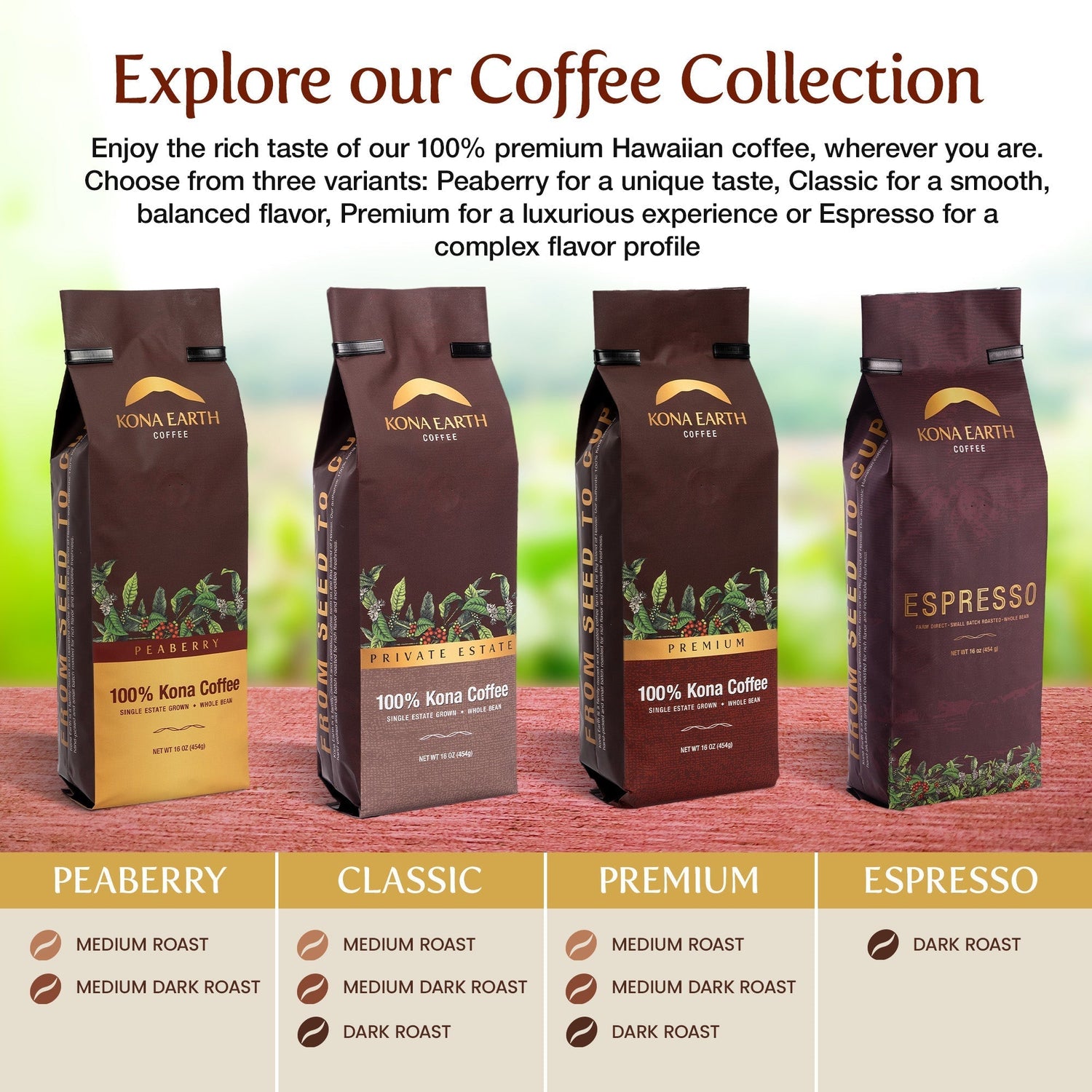
For many buyers, the best way to think about Kona coffee is not as a commodity but as a premium food product. You choose it for authenticity, craftsmanship, and experience. Brands built around farm-direct sourcing, such as Kona Earth, reinforce that value by connecting the coffee more closely to its origin instead of treating it like a generic retail item.
The most useful question may not be why is Kona coffee expensive, but what kind of coffee experience you want every morning. If you want rarity, purity, and a cup that carries the character of Hawaii from farm to cup, a premium price is not the surprise. It is part of what protects the quality you came for.
Comments (0)
Leave a Comment