
A bag can say Kona in bold type and still tell you very little about what is actually inside. That is why authentic Kona coffee labels matter. If you are paying for one of the world’s most distinctive origin coffees, the label should make the truth clear at a glance - not hide it in fine print.
For buyers who value origin, craftsmanship, and a clean path from farm to cup, Kona is not a style. It is a place, a growing region, and a protected identity tied to flavor, elevation, and agricultural heritage on Hawaii Island. Real Kona coffee carries a certain expectation: vivid aroma, remarkable smoothness, and the kind of balance that makes every cup feel elevated. The label should support that expectation, not dilute it.
Why authentic Kona coffee labels matter
Kona is one of the most recognized coffee origins in the United States, and that recognition creates a problem as well as prestige. The name carries weight, so it often appears on products that contain only a small percentage of Kona coffee or lean heavily on broader Hawaiian branding to imply more than they deliver.
That is the gap discerning buyers need to watch. A premium coffee label should answer simple questions with confidence: Is this 100% Kona Coffee? Where was it grown? Who roasted it? How direct is the sourcing? If those answers are missing or softened by vague language, the label is doing marketing first and transparency second.
For a customer shopping for a luxury everyday ritual or a meaningful gift, label clarity is part of the product experience. It protects value. It also protects taste. When coffee is presented as Kona but built around lower-cost beans, the cup rarely delivers the signature profile buyers expect from true Kona origin.
What authentic Kona coffee labels should say
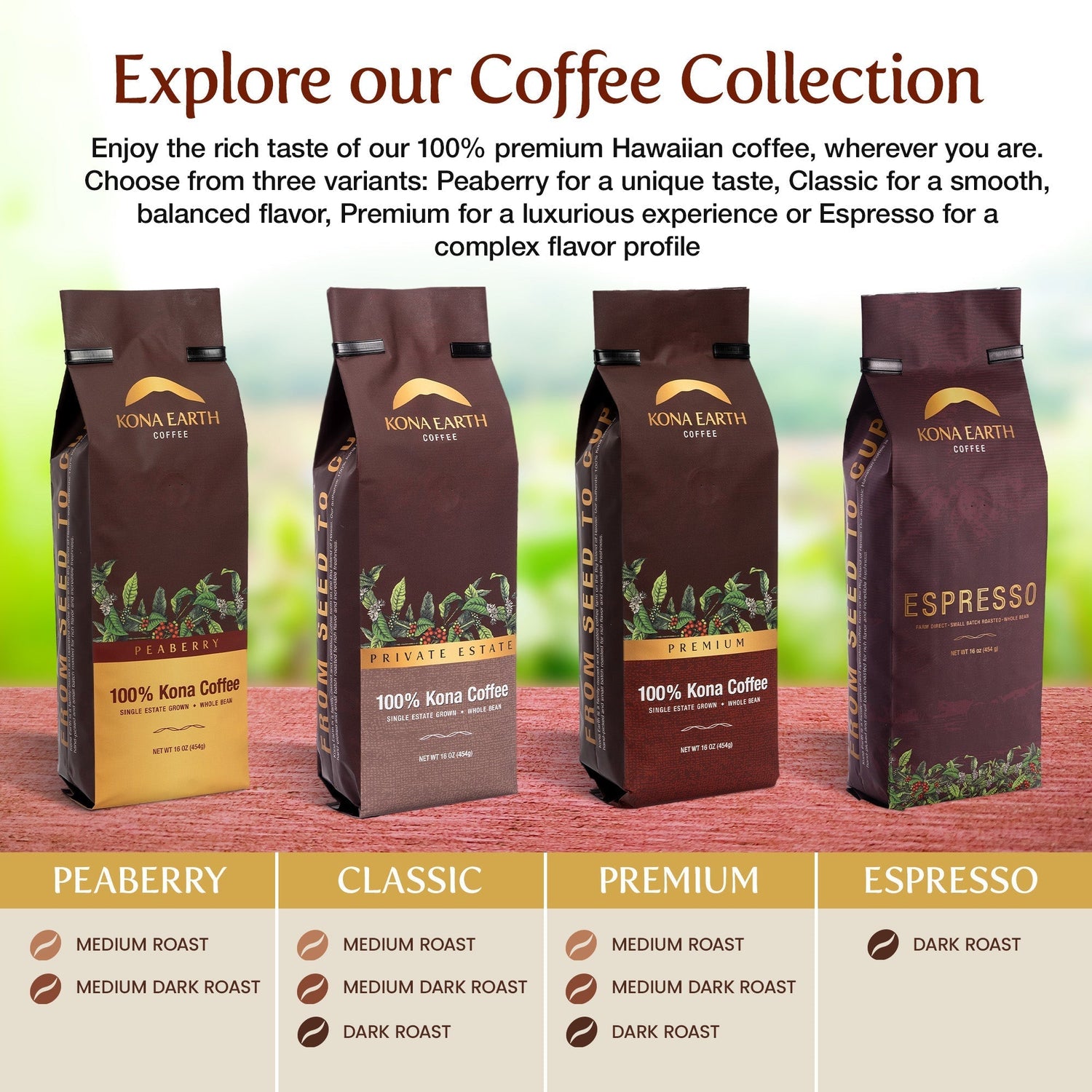
The strongest label language is also the simplest. If a coffee is truly pure origin, the package should clearly state 100% Kona Coffee. That phrase matters because it separates origin-pure coffee from blends that borrow the Kona name without delivering a fully Kona cup.
From there, the best labels continue the story with specifics. Growing region, roast details, and sourcing information all help reinforce authenticity. Farm-direct fulfillment or crop-to-cup language can be especially meaningful when it reflects a real connection between producer and customer rather than a broad lifestyle claim.
There is also a difference between premium branding and empty luxury language. Words like award-winning, small-batch roasted, and farm-direct carry weight when they are backed by a company built around that model. On an authentic product, those details add confidence. On a weak product, they often act as decoration.
A reliable label should make the origin feel precise, not generalized. “Hawaiian coffee” is not the same as 100% Kona Coffee. “Kona blend” is not the same as 100% Kona Coffee. If you want the real thing, the label should say so without hesitation.
How to read authentic Kona coffee labels without getting misled
Reading a coffee label well is less about memorizing legal language and more about noticing what is emphasized and what is tucked away. Front-of-bag design often sells the dream. The real test is whether the details match that presentation.
If Kona is the headline but the product is actually a blend, that distinction may appear in smaller print. That does not always mean the product is low quality. Some buyers enjoy blends for price or flavor style. But it does mean you are purchasing something different from a pure Kona origin coffee, and the label should not blur that difference.
Look closely at percentage claims. If the package does not clearly say 100% Kona Coffee, pause. The absence of that statement is often telling. If the origin is real and complete, premium coffee brands usually lead with it because it is the strongest proof of value they have.
Also pay attention to whether the label communicates traceability. A farm-direct company has every reason to talk about source integrity, harvest connection, and small-batch roasting. Those details strengthen trust because they shorten the distance between where the coffee was grown and where it is enjoyed.
The difference between 100% Kona Coffee and Kona blends
This is where many buyers make an expensive assumption. Seeing the word Kona does not automatically mean the bag contains only beans from the Kona district. A Kona blend includes Kona coffee, but not exclusively. The percentage can vary, and that variation changes both value and cup character.
For some shoppers, that may be an acceptable trade-off. A blend can offer a lower entry price or a broader flavor profile. But if your goal is the unmistakable smoothness and refined finish associated with authentic Kona, a blend is simply not the same purchase.
That is why authentic Kona coffee labels should not leave room for interpretation. Premium buyers are not just buying caffeine. They are buying provenance, rarity, and sensory distinction. Those qualities are strongest when the label reflects complete origin purity.
A true 100% Kona Coffee product earns its premium by being specific. It does not need to rely on tropical imagery alone. It can stand on origin, craftsmanship, and direct sourcing.
Signs of a premium, trustworthy Kona label
A trustworthy label tends to feel confident rather than crowded. It does not overcompensate with vague promises because the product itself carries the story. Clear origin language, roast information, and source credibility usually matter more than excessive copy.
You should expect a premium Kona coffee brand to speak directly about authenticity. That might include references to farm-direct fulfillment, small-batch roasting, or award-winning quality. These details matter because they support a broader promise: what is on the label matches what is in the cup.
Packaging also sends a signal about intent. Premium coffee presentation should feel polished and deliberate, but appearance alone is never enough. The best labels pair visual refinement with precise claims. When design and disclosure work together, the product feels elevated and trustworthy at the same time.
This is especially important for gifting. A Kona coffee gift should carry the kind of confidence that comes from verified origin. Whether you are sending a holiday box, a thank-you gift, or a monthly subscription, authentic labeling helps ensure the product delivers on its premium promise before the bag is even opened.
Authentic Kona coffee labels and the farm-to-cup advantage
One of the clearest signs of authenticity is a short supply chain. When coffee moves from the farm through roasting and fulfillment with minimal distance between origin and buyer, the story becomes easier to verify and the product experience becomes more coherent.
That is the advantage of a crop-to-cup model. It is not just about romance or branding. It improves trust. Buyers who care about origin purity want to know that the company behind the label is closely connected to the coffee itself, not simply sourcing a product and wrapping it in Kona language.
For specialty coffee customers, this connection changes the meaning of premium. Premium is not only flavor, though that matters deeply. It is also transparency, stewardship, and the confidence that the label reflects real agricultural origin rather than borrowed prestige.
That is where a focused brand such as Konaearth.com stands apart. When a company is built around 100% Kona Coffee, direct sourcing, and small-batch quality, authenticity is not a line on the package. It is the operating model behind the package.
How to shop with confidence
If you want a truly elevated Kona experience, shop with a simple standard. Start by asking whether the label plainly says 100% Kona Coffee. Then look for supporting details that reinforce credibility: farm-direct sourcing, small-batch roasting, and a clear commitment to origin purity.
If the wording feels evasive, overly broad, or visually louder than it is specific, trust that instinct. Premium coffee should not require detective work. A luxury product can still be straightforward.
The reward for reading carefully is more than avoiding disappointment. It is getting the cup you came for in the first place - fragrant, smooth, and unmistakably Kona. When the label is authentic, the experience has a better chance of being authentic too.
The best Kona coffee does not need a complicated story. It just needs a truthful one, clearly written, and worthy of what is inside.
Comments (0)
Leave a Comment