
A coffee bag can promise volcanic soil, island flavor, or a celebrated growing region - yet the most meaningful details are often printed in smaller type. Coffee origin labels are where a premium purchase becomes a confident one. For anyone seeking authentic 100% Kona coffee, understanding the label is the difference between bringing home a true taste of Hawaii and buying a product whose name tells only part of the story.
Origin is not marketing decoration. It shapes the coffee’s character, from the aroma that rises when you open a fresh bag to the sweetness, body, and finish in the cup. More importantly, a clear origin statement tells you whether the producer stands behind what is inside.
Why coffee origin labels deserve a closer look
Coffee is agricultural. Like wine, chocolate, and produce, its flavor begins with place: soil, rainfall, elevation, growing conditions, harvest practices, and the people who tend the crop. A label that identifies origin precisely gives the customer a closer connection to those conditions.
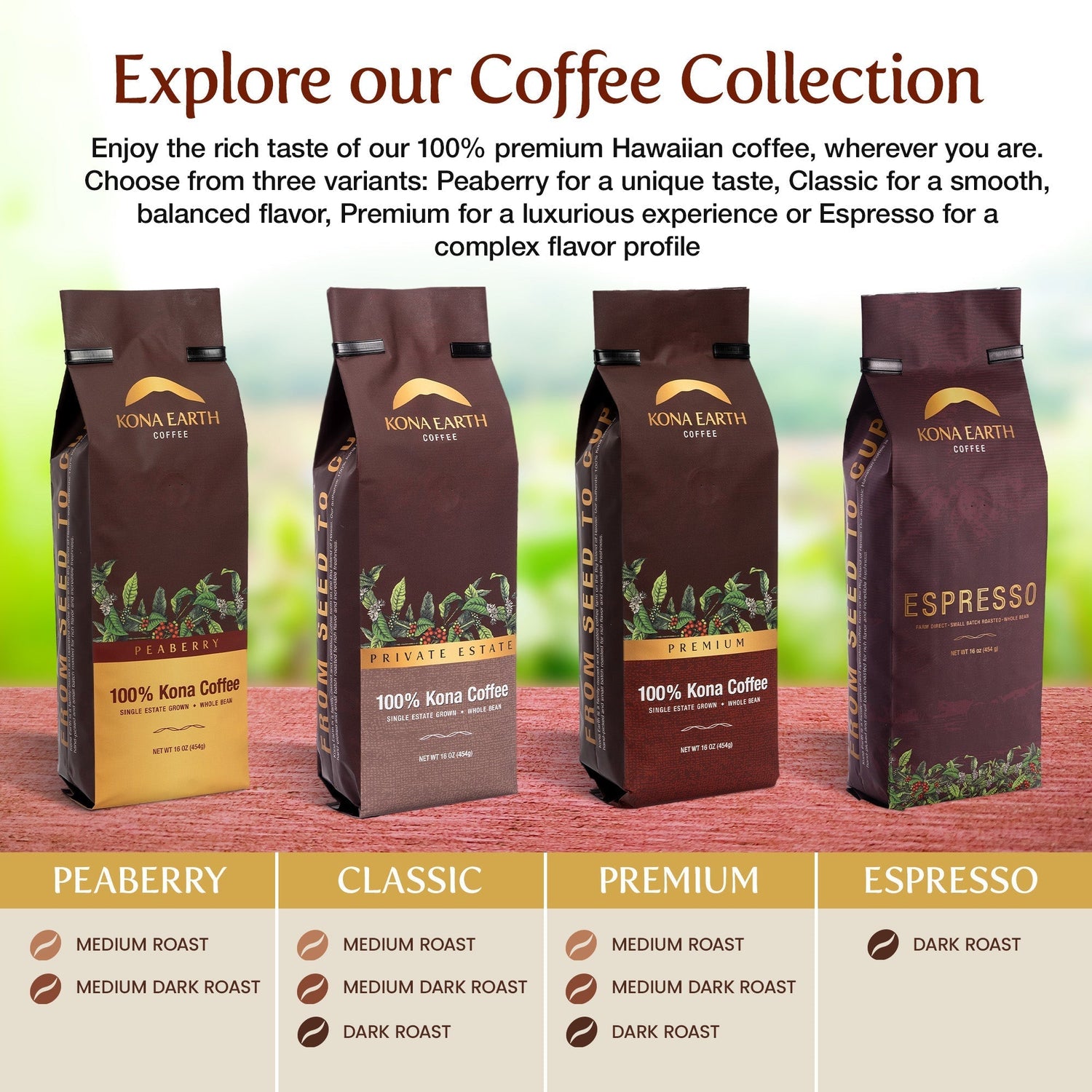
But not every origin statement carries the same weight. “Kona blend,” “Hawaiian blend,” and “100% Kona Coffee” communicate very different things. The first two may reference a flavor profile or include a portion of coffee from the named region. The third makes a direct statement about the coffee itself: the beans are entirely from Kona, a distinct coffee-growing area on Hawaii Island.
That distinction matters because Kona is one of the world’s most recognized coffee origins. Its limited growing area, careful cultivation, and naturally favorable climate create a coffee prized for its smooth texture, gentle brightness, and layered sweetness. When the name Kona appears prominently on a package, buyers deserve to know exactly what it represents.
What “100% Kona Coffee” should tell you
A 100% Kona Coffee label should be clear, easy to find, and free from qualifying language that changes the claim. It signals that the coffee in the bag was grown in Kona rather than supplemented with beans from other origins.
This purity offers more than prestige. It gives you a more consistent experience of the region’s signature cup profile. Expect an inviting aroma, balanced body, and a polished finish that feels composed rather than harsh. Individual harvests and roast styles can create variation, of course. That is part of the pleasure of an agricultural product. Still, a pure origin gives that variation a meaningful point of reference.
A blend is not automatically a poor coffee. Blending can be an intentional craft, and many blends are enjoyable. The issue is transparency. If your goal is to experience Kona itself, the package should say 100% Kona Coffee, not rely on a large Kona name paired with blend language elsewhere on the label.
Reading a Kona label with confidence
Start with the most direct claim on the package. Look beyond the front-panel imagery and search for language describing the coffee’s actual composition. Premium coffee should not make you work to understand its origin.
When comparing coffee origin labels, use these four practical checks:
- Look for “100% Kona Coffee” as a clear product statement, not simply “Kona” in the product name.
- Check whether the label identifies the growing region and provides a meaningful source story.
- Find the roast date or freshness information, since exceptional coffee deserves to be enjoyed near its peak.
- Consider who controls the journey from cultivation through roasting and fulfillment.
The last point is especially valuable. A farm-direct model shortens the distance between the people responsible for the crop and the customer brewing it at home. That connection supports better oversight at each stage, from harvest decisions to small-batch roasting and final shipment.
For the buyer, it also creates a more accountable promise. When one producer maintains control throughout the process, origin is not a vague concept passed between multiple intermediaries. It is a standard that can be protected from farm to cup.
Be careful with broad geographic language
“Hawaiian coffee” may sound specific, but Hawaii is a state with multiple coffee-growing areas and a wide range of products. The phrase can be useful when a coffee genuinely represents a broader Hawaiian sourcing program, but it is not the same as a 100% Kona claim.
The same principle applies to regional language everywhere. A country name is broader than a region. A region is broader than a particular producer or lot. More detail does not automatically guarantee a better cup, but it gives you a clearer basis for judging value, flavor expectations, and authenticity.
For a gift, this clarity becomes even more important. A bag labeled 100% Kona Coffee communicates a specific, memorable origin. It turns an everyday coffee ritual into a gift with a real sense of place.
Freshness is part of origin integrity
Even the most precise origin label cannot compensate for coffee that has sat too long after roasting. Coffee’s aromatic compounds are at their most expressive soon after roasting, which is why small-batch production matters for premium whole bean coffee.
Whole beans hold their character longer than pre-ground coffee because grinding greatly increases the surface area exposed to air. Grinding just before brewing preserves more of the fragrance and flavor that make Kona distinctive. A good grinder, clean water, and a measured brew ratio will let the origin show itself with far more clarity.
Freshness and origin work together. The label tells you where the coffee began; careful roasting and prompt farm-direct fulfillment help ensure that character reaches your kitchen. This is not about chasing a technical ideal at the expense of pleasure. It is about giving a remarkable coffee the treatment it deserves.
Why direct sourcing changes the customer experience
In a conventional supply chain, a coffee moves through many hands before it reaches the shelf. Each step can be managed responsibly, but each also adds distance between the grower’s standards and the final customer experience.
Farm-direct coffee offers another model. The same source can oversee cultivation, processing, roasting, packaging, and shipment. That continuity makes it easier to protect origin purity and maintain a deliberate roast profile. It also means customers can buy with a stronger understanding of where their coffee came from and why it tastes the way it does.
At Kona Earth, this crop-to-cup approach centers on award-winning 100% Kona Coffee, small-batch roasted and shipped directly from the farm. The goal is straightforward: preserve the quality of an exceptional origin from the first stages of production through the moment the bag arrives at your door.
That level of care also has practical value for subscription buyers. A recurring delivery is most satisfying when it is built around coffee you trust. Clear origin labeling removes guesswork, while direct fulfillment helps make a premium daily ritual feel reliably special.
The price question: what are you paying for?
Authentic Kona coffee typically costs more than mass-market coffee, and the label helps explain why. Kona is grown in a limited region, cultivated with considerable care, and produced in far smaller quantities than commodity coffee. A 100% Kona claim reflects that scarcity and the work required to maintain quality.
Price alone does not prove authenticity. A higher price can signal exclusivity without providing meaningful sourcing information. That is why the strongest purchase decision combines both: a premium product positioned at a premium price, supported by a precise origin statement and a producer willing to stand behind it.
Think of it as paying for a specific experience, not a generic category. You are choosing a coffee with a defined home, a recognizable flavor tradition, and a traceable path to your cup.
Make your next bag tell a complete story
The best coffee origin labels do not rely on mystery. They state the origin plainly, respect the customer’s intelligence, and connect the product claim to the way the coffee is made and delivered. When a bag says 100% Kona Coffee and the producer can carry that promise from farm through fresh roasting, the result is more than a beautiful package.
It is a daily invitation to slow down for a moment, grind fresh, breathe in the aroma, and taste a place known for producing one of Hawaii’s most celebrated coffees.
Comments (0)
Leave a Comment