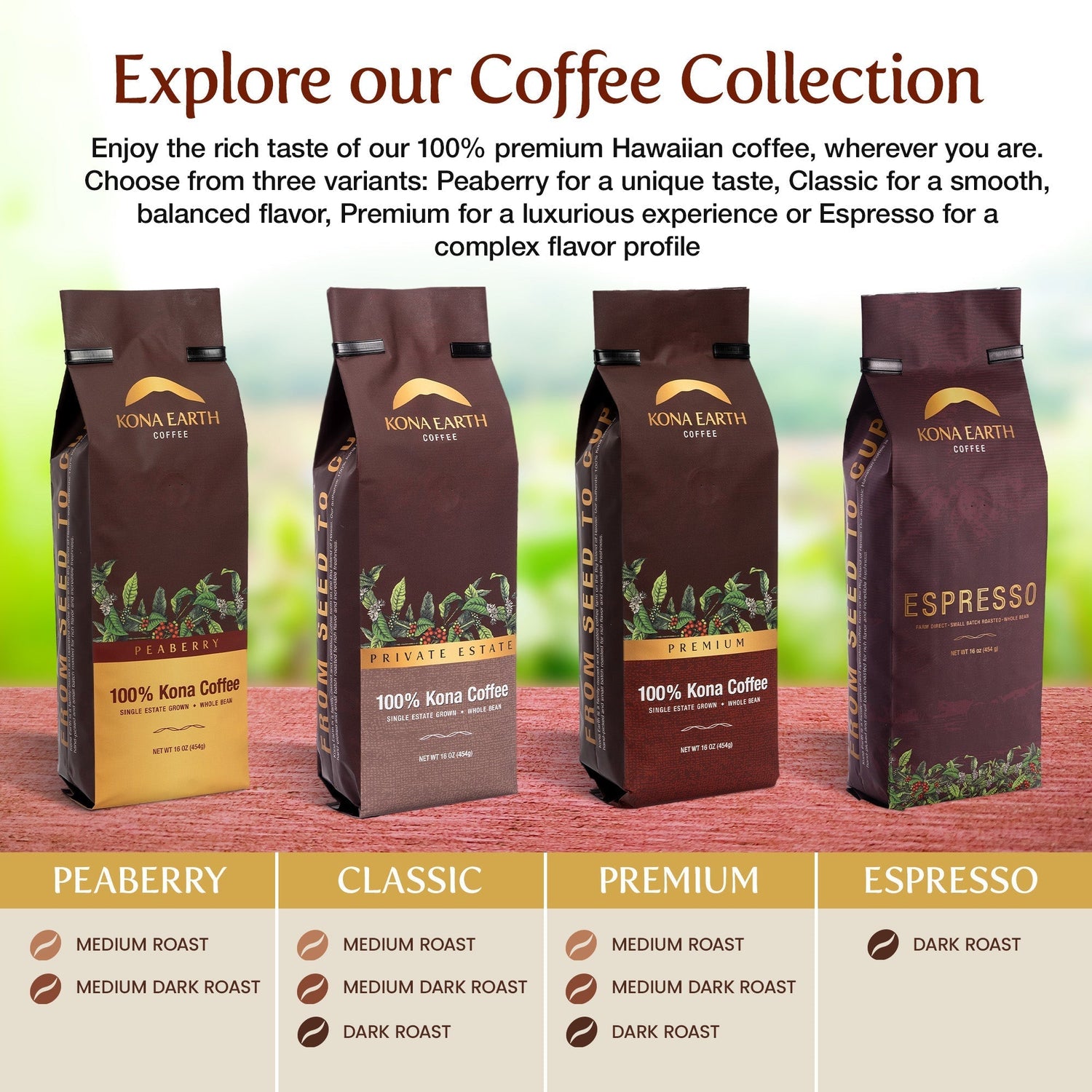


A bag of 100% Kona coffee can carry remarkable flavor from the volcanic slopes of Hawaii to your kitchen, but timing shapes how much of that flavor reaches your cup. Understanding how coffee roast dates work helps you choose beans at their most expressive, brew with confidence, and enjoy the polished sweetness, aroma, and depth that fresh whole bean coffee is meant to deliver.
What a Coffee Roast Date Actually Tells You
A roast date is the day coffee beans were roasted. It is not a sell-by date, expiration date, or a promise that coffee suddenly changes overnight. Instead, it gives you the clearest starting point for judging freshness.
Before roasting, green coffee beans are dense, stable, and relatively mild in aroma. Roasting transforms them. Heat develops their sugars, oils, and aromatic compounds, creating the flavors associated with a carefully roasted cup: caramel-like sweetness, toasted nuts, bright fruit, cocoa, and the distinctive character of the coffee's origin.
That transformation also starts a clock. Once roasted, beans gradually release gases and interact with oxygen. Their most vivid aromatics slowly fade over time. A roast date lets you understand where the coffee is on that natural freshness curve.
For a premium origin coffee, that transparency matters. You should know when the beans were roasted, not be left to guess from a vague shelf-life statement. A clear date reflects attention to the coffee after harvest, through roasting, packing, and fulfillment.
How Coffee Roast Dates Work After Roasting
Freshly roasted coffee needs a short period to settle. During roasting, beans build up carbon dioxide. In the days that follow, they release it through a process called degassing.
Carbon dioxide is part of why a very fresh coffee can seem unusually lively. It also affects extraction. If beans are brewed immediately after roasting, excess gas can push water away from the grounds, making it harder to extract the coffee evenly. The result may taste sharp, uneven, or less developed than the roast intended.
For most whole bean coffee, the flavor window often begins to open several days after roasting. Many coffee drinkers find that beans are especially enjoyable from roughly day 5 through day 21, though this is a guideline, not a hard rule. Coffee can remain delicious beyond that period, particularly when it has been stored well.
The best timing depends on the coffee and the way you brew it. A lighter roast may need more rest before its sweetness and complexity fully emerge. A fuller roast can become more approachable sooner. Espresso is especially sensitive to degassing and may benefit from a longer resting period, while a pour-over or drip brewer may taste excellent earlier.
The goal is not to chase a single perfect day. Start with recently roasted beans, then notice how the cup evolves. One week after roasting, you may find a coffee vivid and fragrant. Two weeks later, it may become rounder and more integrated. Both can be exceptional experiences.
Why whole beans hold flavor longer
Whole beans protect their interior flavor compounds far better than pre-ground coffee. Grinding dramatically increases the surface area exposed to oxygen, which speeds up aroma loss. That is why grinding immediately before brewing makes such a visible difference in the cup.
For the richest expression of 100% Kona coffee, buy whole beans when possible and grind only what you need. The fragrance that rises from fresh grounds is not just a pleasant ritual. It signals that the coffee's volatile aromatics are still present and ready to be brewed.
Fresh Does Not Mean Roasted This Morning
There is a difference between fresh coffee and coffee that is too newly roasted to show its best. A roast date allows room for that distinction.
Coffee roasted today is certainly fresh, but it may still be in its most active degassing phase. Coffee roasted a week ago has had time to settle while retaining abundant aroma and flavor. For many households, that makes a bag delivered shortly after roasting ideal: it arrives with enough freshness to enjoy over the following days and weeks.
This is also why the farm-direct model matters. When control remains close to every stage of production, from crop to roast to fulfillment, there is less uncertainty between the roaster and your kitchen. Small-batch roasting supports a more deliberate rhythm, helping coffee move with purpose rather than sitting anonymously in a long distribution chain.
At Kona Earth, award-winning 100% Kona coffee is small-batch roasted and shipped directly from the farm, giving customers a direct path to a fresher, more authentic cup. This approach is built around the coffee itself, not the compromises of commodity shelf time.
Roast Date vs. Best-By Date
A best-by date is usually a broad quality estimate. It can be useful, but it does not tell you nearly as much as the roast date. Two bags with the same best-by date could have been roasted weeks apart, depending on how a producer sets its packaging timeline.
A roast date is more specific. It helps you decide when to open a bag, how much to order, and how quickly to enjoy it. If you are ordering coffee for daily brewing, choose an amount you can reasonably finish within a few weeks of opening. Larger households, offices, and subscription customers may move through coffee quickly enough to keep several bags in a natural rotation.
You don't need to discard coffee simply because it has moved past a commonly suggested peak window. Properly stored beans can still brew a satisfying cup well after that point. The change is generally gradual: aromatics become quieter, sweetness may feel less vivid, and the finish can lose some of its definition.
For an origin as distinctive as Kona, enjoying coffee nearer to the roast date simply gives you a better chance to taste the qualities that make it special.
How to Store Freshly Roasted Coffee
Good storage protects the value of a fresh roast date. The four main threats are air, heat, moisture, and light. Keep beans in their original resealable bag if it is designed for coffee storage, or transfer them to an airtight, opaque container.
Store that container in a cool, dry cabinet away from the stove, dishwasher, sunny counter, or pantry shelf that runs warm. Avoid moving coffee in and out of the refrigerator, where condensation and food odors can affect the beans. For the coffee you plan to use every day, a stable room-temperature cabinet is the better choice.
If you need to hold unopened coffee for longer, divide it into small, airtight portions and freeze those portions only once. Let a portion return to room temperature before opening it. This limits repeated exposure to moisture and keeps the remaining coffee protected.
Just as importantly, avoid buying more coffee than your routine can support. Freshness doesn't improve by saving a beautiful bag for a vague future occasion. Make the occasion the next quiet morning, the weekend breakfast table, or the gift-worthy cup you share with someone who appreciates exceptional coffee.
Use the Roast Date to Brew With Intention
A roast date is useful information, not a rulebook. Begin by brewing the coffee as you normally would, then adjust based on what you taste. If a very recent roast seems overly bright or difficult to dial in, let it rest a few more days. If a bag has been open for a while and tastes softer than expected, slightly increase your dose or tighten your grind to bring more structure to the cup.
Keep your water, grind, and brewing method consistent when comparing one week to the next. You will start to recognize how fresh coffee changes, and which point in the cycle suits your palate. That knowledge makes every bag more rewarding.
The finest coffee rituals are not complicated. Start with authentic, recently roasted whole beans, protect them from heat and air, and brew them while their aromas still fill the room. A roast date gives you the confidence to enjoy each cup when the coffee has the most to say.
In this short clip below, Kona Earth co-owner Joanie Wynn shares some tips for finding (and keeping) fresh Kona coffee beans.
Comments (0)
Leave a Comment