
A bag says Kona on the front. The price looks appealing. Then you turn it over and realize you are not looking at the same thing as 100% Kona Coffee. That is the heart of Kona coffee vs. Kona blend - two labels that sound similar, but deliver very different coffee experiences.
If you care about origin, flavor clarity, and buying with confidence, the distinction matters. True Kona Coffee is grown in a specific region on the slopes of Hawaii Island, where elevation, mineral-rich volcanic soil, cloud cover, and steady island sun create one of the world’s most recognizable cup profiles. A Kona blend, by contrast, includes only a portion of Kona coffee and is mixed with other coffees. Sometimes that Kona portion is small enough that the name on the bag feels much bigger than what is actually inside.
Kona Coffee vs Kona Blend: The Core Difference
The simplest way to understand Kona coffee vs. Kona blend is this: 100% Kona Coffee contains only Kona beans from the Kona region of Hawaii. A Kona blend contains Kona coffee plus other coffees from elsewhere.
That difference is not just technical. It changes the cup. With 100% Kona Coffee, you are tasting the full expression of origin - clean sweetness, gentle brightness, silky body, and the kind of smooth finish that makes another sip easy. The profile is refined rather than harsh. It is prized for balance.
With a Kona blend, the final flavor depends on what else is mixed in and how much Kona is actually present. Some blends are built to lower cost. Others are designed to create a familiar coffee profile with just a trace of Kona character. That means the flavor may be heavier, flatter, more bitter, or less nuanced than what coffee buyers expect when they see the Kona name.
Why the Label Can Be Misleading
Kona carries prestige for a reason. It is a rare origin with a reputation built on quality, not volume. That also means the name has marketing power.
A shopper scanning shelves may see Kona in large type and assume the bag contains pure Kona Coffee. In many cases, it does not. The front label can spotlight Kona while the finer print reveals the product is a blend. If the percentage of Kona coffee is listed, it may be much lower than an uninformed buyer would guess.
This is where premium coffee buyers tend to separate quickly from impulse buyers. Once you know what to look for, the packaging becomes much easier to read. If the bag does not clearly state "100% Kona Coffee," you should assume it is something else until proven otherwise.
What 100% Kona Coffee Tastes Like
Authentic Kona Coffee is not famous for being strong in a blunt, overpowering way. It is valued because it is polished.
Expect a cup with a smooth mouthfeel, low bitterness, and a layered profile that can show notes of brown sugar, nuts, soft fruit, cocoa, and gentle spice depending on roast and harvest. The finish is usually clean and balanced, which is one reason Kona appeals to both longtime specialty coffee drinkers and people simply looking for a more elevated daily ritual.
That balance is part of its luxury. 100% Kona Coffee does not need to shout. Its quality comes through in texture, aroma, and the way the flavors hold together from first sip to last.
A blend may still be enjoyable, but it rarely delivers that same sense of place. Once other origins dominate the mix, the Kona signature becomes harder to find.
What You Are Really Paying For
Price is often where the debate shifts. A Kona blend usually costs less than 100% Kona Coffee, and for some shoppers, that is enough reason to choose it. But lower price and better value are not always the same thing.
When you buy 100% Kona Coffee, you are paying for a specific origin, limited production, careful cultivation, and the integrity of a pure regional coffee. You are also paying for transparency. There is no guesswork about what is in the bag.
When you buy a blend, the lower price may reflect a lower percentage of Kona and a much larger portion of commodity coffee. If your goal is simply to drink something affordable with the word Kona on it, that may be acceptable. If your goal is to experience Kona’s actual flavor and authenticity, the savings can be misleading.
For gift buyers, this matters even more. A bag of 100% Kona Coffee communicates discernment and quality. A blend can look premium at first glance, but it does not carry the same meaning once the details are understood.
How to Read the Bag Like an Informed Buyer
The easiest way to avoid disappointment is to treat the label as a quality check, not a marketing promise.
First, look for the phrase 100% Kona Coffee. If that exact standard is not clear, the product is not pure Kona. Next, examine how the coffee describes its sourcing. Origin-specific language should be direct, not vague. Premium producers do not hide the details.
Then consider the company behind the coffee. Brands built around direct sourcing and origin integrity tend to be far more transparent about what they sell. That is especially important in a category where the name Kona is often used more aggressively than the coffee itself.
Roast style matters too, though it is secondary to authenticity. A careful roast can showcase Kona’s sweetness and elegance. An overly dark roast can flatten nuance, making even a good coffee taste more generic. If you are buying for flavor rather than just brand recognition, origin purity should come first, with roast preference close behind.
Who Should Buy a Kona Blend?
There are cases where a Kona blend makes sense. If you are serving a crowd, watching budget closely, or just curious about the category without committing to a premium purchase, a blend can be an entry point.
But it helps to be honest about what you want. If you want true Kona character, a blend may leave you wondering what the excitement is about. If you want a lower-cost coffee with some Kona included, then a blend may meet that expectation.
The problem begins when buyers expect a blend to perform like 100% Kona Coffee. That is where disappointment starts - not because every blend is bad, but because the label and the cup are often miles apart.
Who Should Choose 100% Kona Coffee?
If coffee is part of your daily ritual and quality matters, 100% Kona Coffee is the clear choice. It is for buyers who want clean origin flavor, verified authenticity, and a product that feels worthy of the premium it commands.
It is also the right choice for gifting. Origin-specific coffee carries a sense of place and care that generic premium coffee cannot replicate. The appeal is not just taste. It is trust, rarity, and the confidence that what you are giving is exactly what it claims to be.
Subscription buyers often feel this difference too. When coffee arrives regularly, consistency becomes part of the value. A farm-direct, crop-to-cup approach gives buyers more confidence than a loosely defined blend ever could.
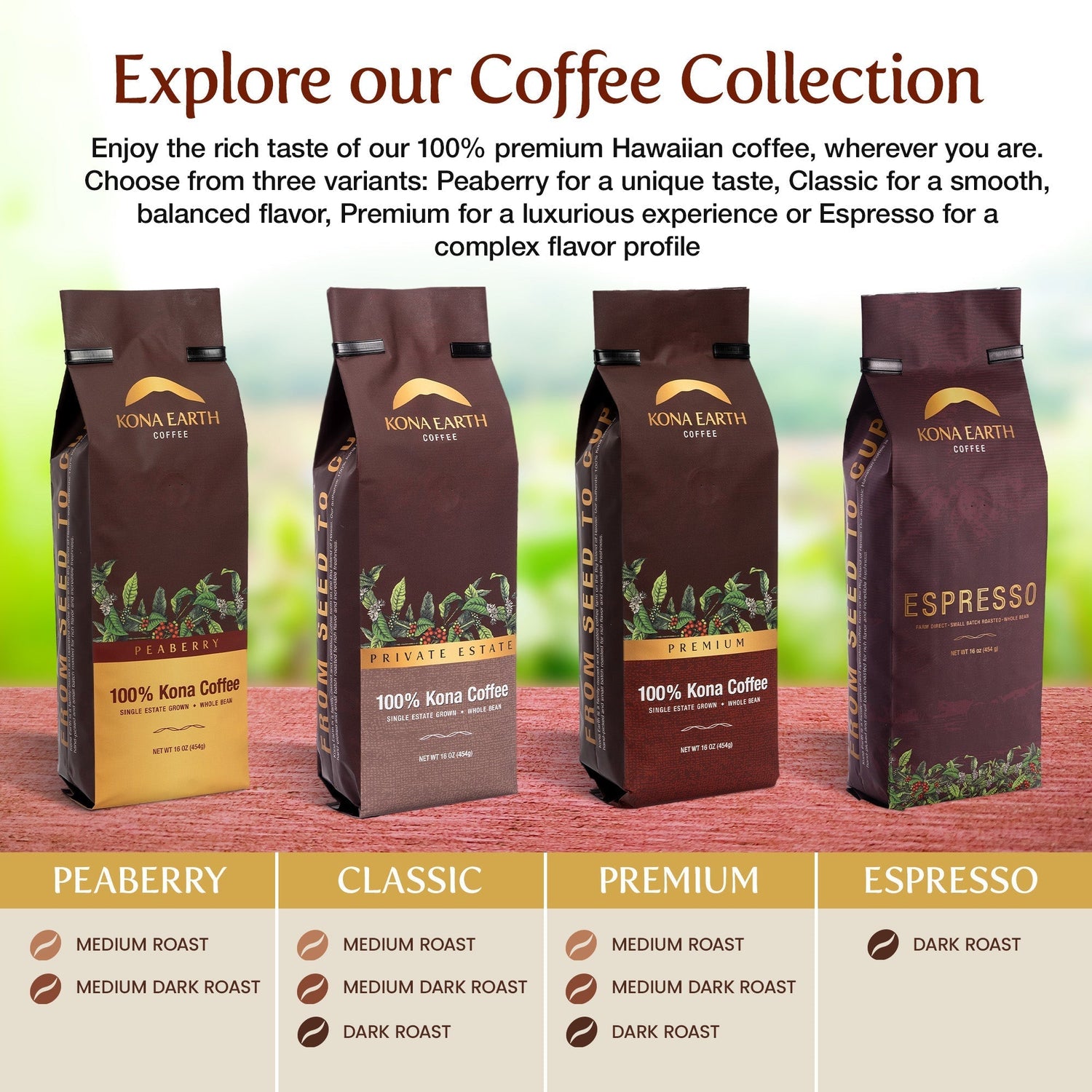
For shoppers who want that level of assurance, Kona Earth reflects what the category should look like - award-winning 100% Kona Coffee, small-batch roasted and delivered with direct-from-origin credibility.
Kona Coffee vs Kona Blend for Everyday Brewing
For daily brewing, the choice comes down to what you want your morning cup to feel like. If coffee is fuel, a blend may be enough. If coffee is a moment you look forward to, 100% Kona Coffee brings more to the table.
Its appeal is not extravagance for the sake of image. It is the pleasure of a smoother, more expressive cup and the satisfaction of knowing the label matches the contents. That kind of confidence is hard to overstate once you have had the real thing.
And that is the practical answer to Kona coffee vs. Kona blend: one gives you the true origin, the other gives you a version of the name. If you want the taste, character, and authenticity that made Kona famous, buy the coffee that is willing to say exactly what it is. Your cup should not leave room for doubt.
Comments (0)
Leave a Comment