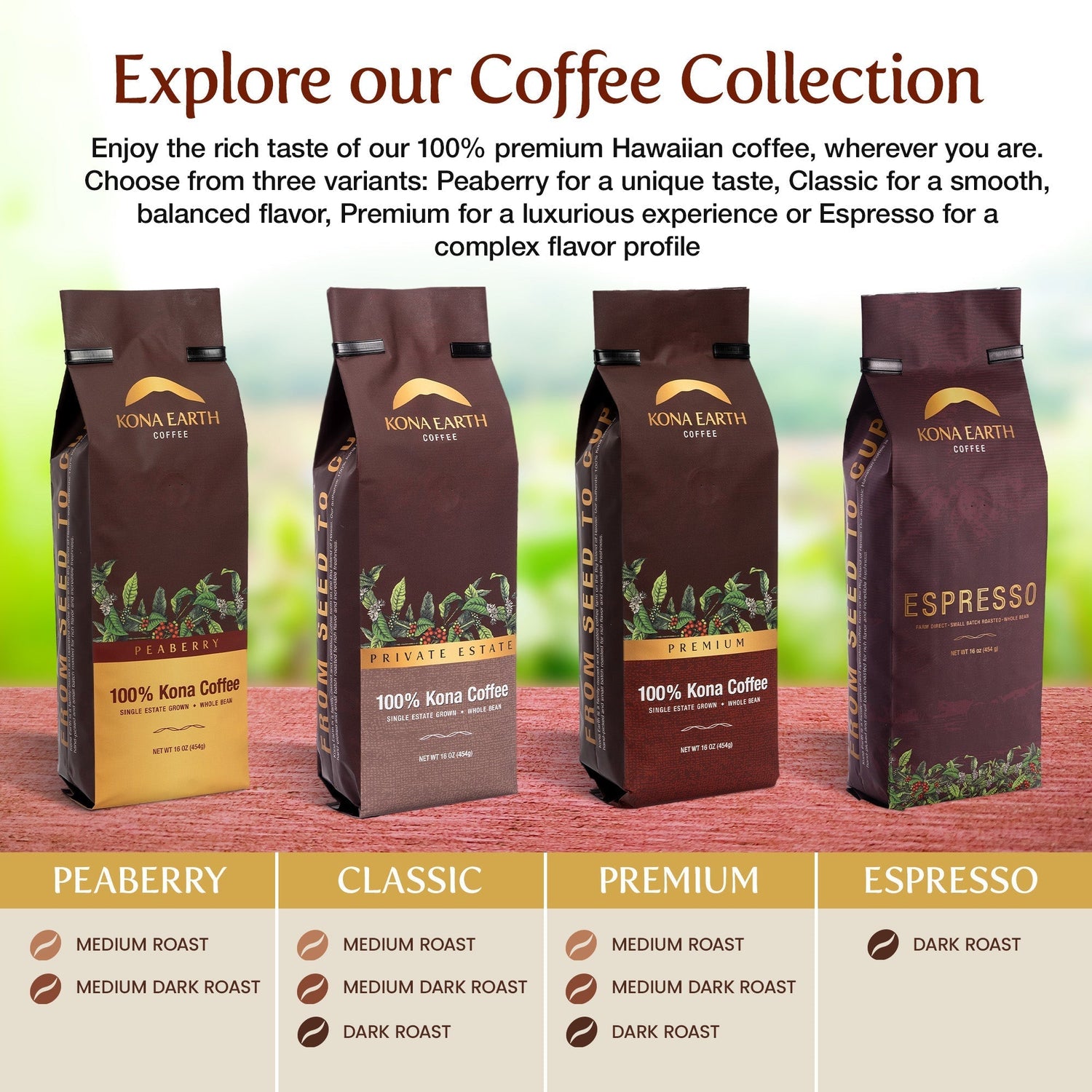


A coffee bean can tell two very different stories depending on how it is roasted. In the conversation around light roast versus dark roast, the real choice is not simply stronger versus milder. It is about whether you want the cup to foreground the bean’s place of origin or the deep, caramelized character created in the roaster.
For 100% Kona coffee, that distinction matters. Grown in Hawaii’s singular volcanic landscape and carefully prepared from farm to cup, Kona has natural sweetness, elegant body, and a clean finish worth preserving. The right roast preference comes down to your palate, your brewing method, and the kind of daily coffee ritual you want to savor.
Light Roast Versus Dark Roast: The Core Difference
Roasting transforms green coffee into the aromatic beans that fill your grinder. As heat and time increase, sugars brown, acids shift, and the bean becomes more porous. A shorter roast retains more of the bean’s inherent character, while a longer roast develops deeper toasted flavors and a fuller, weightier impression.
At the lighter end of the spectrum, the cup often feels lively and detailed. You may notice delicate sweetness, citrus-like brightness, floral notes, or fruit-toned complexity depending on the coffee and the brew. The roast is present, but it is not designed to dominate the bean.
A dark roast spends more time developing in the roaster. The result is a bolder profile with notes that can suggest cocoa, toasted nuts, brown sugar, baking spice, or a pleasant smoky edge. Acidity is generally less pronounced, while body and roast-driven richness take center stage.
Neither profile is automatically superior. A careful roast should be intentional at either end of the range. The better question is what you want the coffee to express when hot water meets freshly ground beans.
What Roasting Reveals in 100% Kona Coffee
Exceptional coffee starts with exceptional fruit, but roasting determines how much of that origin character reaches your cup. With authentic 100% Kona coffee, a more restrained roast can highlight the qualities that make the region so sought after: a smooth texture, gentle sweetness, refined acidity, and a notably clean finish.
A darker expression can offer a different kind of luxury. It rounds the cup into something plush and familiar, especially for drinkers who favor a substantial, comforting brew. The coffee may taste less overtly fruit-forward and more like the flavors associated with a classic, deeply roasted cup.
This is why farm-direct control matters. When the same team oversees the coffee from cultivation through small-batch roasting and fulfillment, roast decisions are not guesswork. Freshness, consistency, and the character of each coffee can be managed with greater care before whole beans are shipped directly from the farm.
Flavor, Body, and Acidity in the Cup
Flavor is the most obvious difference, but it helps to separate three ideas that are often grouped together.
Flavor notes
The light end of roasting tends to preserve nuanced flavor distinctions. A coffee may feel bright, honeyed, or fruit-accented, with a finish that invites another sip. These details can be especially rewarding for drinkers who enjoy tasting coffee black and noticing how it changes as it cools.
Dark roasting builds flavors through caramelization and roast development. Expect greater emphasis on chocolate-like depth, toasted sweetness, and a more commanding finish. If your ideal morning cup is rich and grounding rather than sparkling and delicate, this profile may feel immediately at home.
Body and texture
Body describes the coffee’s physical presence on the palate. A more lightly developed coffee can feel silky, tea-like, or crisp. A dark roast often feels broader and more coating, particularly when brewed with methods that allow more oils and fine particles into the cup.
Body is not a measure of quality. A graceful, clean cup can be just as memorable as a dense, velvety one. The difference is similar to choosing between a bright white wine and a mature red: both can be beautifully made, but they create different moments.
Acidity
Coffee acidity is a sensory term, not a warning that the cup will taste sour. At its best, it provides lift and structure, much like the brightness in ripe fruit. A lighter roast generally presents more of this lively quality, while dark roasting softens it in favor of deeper, more developed tones.
If you have avoided brighter coffee because of a harsh experience in the past, freshness and brewing may be the missing variables. Stale beans, overly fine grinding, or water that is too hot can make any roast taste sharp or unpleasant.
Which Brew Method Fits Your Preference?
Your brewer can amplify or soften the differences between roast profiles. A pour-over or drip brewer often brings clarity to the cup, making it a natural choice for anyone who wants to notice origin-specific sweetness and delicate aromatics. Use clean water, a consistent medium grind, and freshly roasted whole beans for the most expressive result.
A French press creates a richer texture because more coffee oils remain in the finished cup. It can make a dark roast feel especially luxurious, while also giving a more lightly developed coffee extra roundness. A coarser grind and a patient plunge help keep the cup smooth.
Espresso concentrates everything. A dark roast can produce a dense, traditional shot with deep flavor and a lingering finish. A lighter profile can be vivid and complex, but it requires precise dialing in. Small adjustments to grind size, dose, and extraction time can dramatically change the balance.
For cold brew, darker coffees often offer chocolate-forward comfort with low perceived brightness. Still, a carefully made cold brew from a lighter profile can be remarkably sweet and refreshing. The best choice depends on whether you want mellow richness or a cleaner, more nuanced iced cup.
A Practical Way to Choose
Choose toward the lighter side when you enjoy tasting the distinct character of 100% Kona coffee, usually drink it black, or prefer a cup with brightness and aromatic detail. It is also an excellent choice for slow morning brewing, when there is time to notice the coffee’s changing flavors.
Choose dark when you want a fuller-bodied, roast-forward coffee with a familiar depth. It can be particularly satisfying with breakfast, in milk-based drinks, or on mornings when you want a cup that feels warm, bold, and uncomplicated.
Many discerning coffee drinkers keep both in their pantry. One suits quiet weekends and deliberate brewing; the other meets a busy weekday with dependable richness. Preference can also shift with the season, the meal, and even the time of day.
Freshness Matters More Than Roast Labels
A beautifully chosen profile cannot compensate for coffee that has sat too long after roasting. Whole beans protect flavor longer than pre-ground coffee, but they still benefit from thoughtful storage. Keep them in an airtight container away from heat, direct sunlight, and moisture. Buy only what you can enjoy while the coffee is at its most aromatic.
Grinding immediately before brewing is one of the simplest upgrades available to any home coffee ritual. The fragrance released from fresh grounds is not just appealing - it signals volatile aromatics that will shape the final cup. Pair that freshness with an authentic, farm-direct source, and the difference becomes unmistakable.
Kona Earth small-batch roasts 100% Kona coffee with the journey from Hawaiian farm to your cup in mind. That direct connection offers more than provenance on a label. It gives coffee lovers confidence that the bean, the roast, and the experience have been handled with intention.
The best roast is the one that makes you pause after the first sip. Choose the profile that suits your palate, brew it fresh, and let the unmistakable character of Kona bring a little more pleasure to the everyday cup.
Comments (0)
Leave a Comment