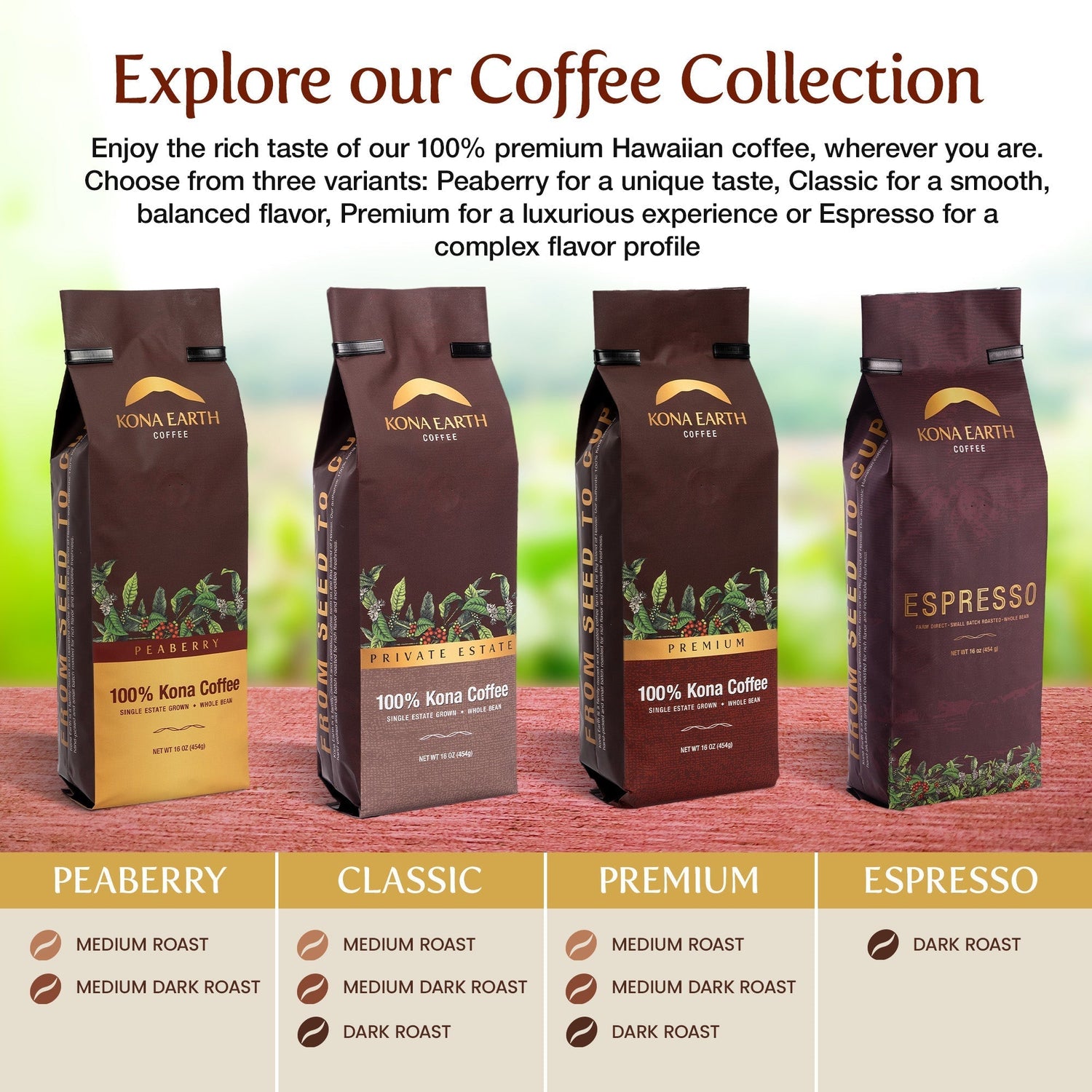

Not all Kona coffee delivers the same cup. If you care about origin, freshness, and flavor that actually reflects Hawaii’s celebrated coffee-growing region, farm direct Kona coffee stands apart quickly. The difference is not marketing language. It shows up in the aroma when the bag opens, in the clarity of the first sip, and in the confidence that what you are drinking is genuinely 100% Kona coffee.
For buyers who want more than a tropical-sounding label, direct sourcing matters. Kona is one of the world’s most recognized coffee origins, but it is also one of the most misunderstood. Many products use the Kona name loosely through blends that contain only a small percentage of Kona beans. That can leave even experienced coffee drinkers paying premium prices for a cup that lacks the depth, sweetness, and polished finish authentic Kona is known for.
What farm direct Kona coffee really means
At its best, farm direct Kona coffee means a shorter, more transparent path from the coffee trees on Hawaii Island to your cup. Instead of passing through multiple intermediaries, the coffee stays closely tied to its source. That matters because every handoff can create distance from the details that shape quality - harvest timing, lot selection, roasting freshness, and storage conditions.
A true farm-direct model also creates accountability. When the farm and the brand are directly connected to fulfillment, there is less room for vague sourcing claims. You are not buying a story built around Kona. You are buying coffee with a clear origin, one that should be identifiable, traceable, and protected from the dilution that has affected this category for years.
This is especially valuable with Kona because the name carries prestige. Prestige attracts imitators. Farm direct sourcing is one of the clearest ways to separate authentic 100% Kona coffee from products that trade on the reputation of the region without delivering its character.
Why farm direct Kona coffee tastes different
The flavor advantage starts long before roasting. Kona coffee benefits from a distinct growing environment: mineral-rich volcanic soil, elevation, cloud cover, and a climate that supports slow cherry development. Those conditions help create the smooth, balanced profile that made Kona famous in the first place.
But origin alone is not enough. Great coffee can be diminished by poor handling. Farm-direct programs are better positioned to preserve quality because they keep decisions close to the source. Cherries can be harvested with more selectivity. Processing can be managed with tighter standards. Lots can be chosen for cup quality instead of broad commercial volume.
In the cup, that often translates to a cleaner, sweeter, more layered experience. Authentic Kona tends to be prized for low bitterness, gentle brightness, and a refined finish rather than aggressive intensity. You may notice notes of honey, milk chocolate, toasted nuts, brown sugar, or soft fruit, depending on roast level and harvest. The appeal is not that Kona tries to overwhelm the palate. It is that the cup feels complete, elegant, and composed.
Freshness plays a role too. Coffee shipped through long supply chains can lose aromatic detail before it ever reaches the customer. A farm-direct, small-batch approach gives buyers a better chance of receiving coffee that still holds onto the fragrant top notes and rounded sweetness that make premium origin coffee worth seeking out.
The authenticity problem in Kona coffee
If you have ever bought Kona coffee and wondered why it tasted ordinary, there is a good chance the issue was not your brewing method. It may have been the coffee itself.
The market is crowded with Kona blends. Some are labeled legally, but they still contain only a fraction of Kona coffee. For casual shoppers, the distinction is easy to miss. Packaging may feature Hawaiian imagery, mention Kona prominently, and still deliver a cup built mostly from lower-cost beans grown elsewhere.
That is why 100% Kona coffee matters, and why farm direct Kona coffee matters even more. One tells you the coffee is pure in origin. The other suggests the supply chain is designed to protect that purity rather than obscure it. For premium buyers, gift shoppers, and subscription customers, that combination is the standard worth looking for.
There is, of course, a trade-off. Authentic farm-direct Kona coffee is not commodity priced. It costs more because the supply is limited, the land is valuable, and the quality expectations are higher. But for buyers who care about provenance and flavor, paying for real Kona is very different from overpaying for a blend with a famous name.
What to look for before you buy
The strongest farm-direct coffees make their case clearly. Start with the simplest question: does the product say 100% Kona coffee, or does it say blend? That single detail can change the entire buying decision.
Next, look at how the coffee is presented. Premium Kona should be sold with confidence around origin, not buried in fine print. Details about farm sourcing, roasting in small batches, and direct fulfillment are meaningful because they indicate control over quality. So is language that speaks specifically to crop-to-cup practices rather than generic claims about being “inspired” by Hawaii.
Roast style matters as well. Kona’s natural balance responds beautifully to thoughtful roasting. A roast that is too dark can flatten the origin and mask the subtle sweetness that makes the coffee distinctive. A medium or medium-dark approach often gives buyers the best expression of body, aroma, and finish, though personal taste still matters. If you prefer a deeper, richer cup, a darker roast can still be appealing - but with Kona, the goal is usually refinement, not char.
Packaging and delivery are part of the equation too. When you invest in a premium coffee, you want that coffee protected from excess air, heat, and age. Farm-direct brands that roast in smaller batches and ship promptly are better aligned with the expectations of specialty buyers.
Who farm direct Kona coffee is best for
This approach is ideal for coffee drinkers who see coffee as more than caffeine. If your morning cup is a ritual, origin matters. If you enjoy tasting the difference between regions, direct sourcing matters. If you are buying a gift and want it to feel elevated from the first impression to the last sip, authenticity matters even more.
Farm direct Kona coffee also fits buyers who want consistency without settling for mass-market flavor. That makes it a strong choice for recurring delivery. A subscription model works especially well here because it keeps freshness on your side while removing the friction of reordering. For households that want premium coffee always within reach, that convenience supports the luxury of the experience rather than cheapening it.
Gift buyers tend to appreciate it for another reason: credibility. A bag of authentic 100% Kona coffee carries more weight than a generic gourmet gift because it offers a clear sense of place. It feels specific, rare, and considered. That is true whether it stands alone or arrives as part of a broader Hawaiian gifting experience with sweets, seasonal pairings, or island-inspired extras.
Farm direct Kona coffee and the value question
Premium coffee always invites the same question: is it worth it? With Kona, the answer depends on what you value.
If the goal is the lowest cost per cup, there are cheaper options everywhere. Farm direct Kona coffee is not trying to compete with warehouse coffee or everyday blends. Its value comes from verified origin, limited supply, careful roasting, and a flavor profile that is difficult to replicate outside the region.
For many buyers, that value becomes obvious once they taste the difference between real Kona and a coffee that simply borrows the name. The cup is smoother. The finish is cleaner. The purchase feels more assured because it is anchored in source, not suggestion.
That confidence is part of the luxury. You are not left guessing what is in the bag or how far it traveled before it reached you. You are choosing a coffee that honors the place it came from and preserves what made that place famous.
Brands built around a true crop-to-cup model, including Kona Earth, appeal to exactly this customer - someone who wants award-worthy quality, direct-from-origin credibility, and a premium experience that feels authentic rather than assembled for marketing.
Why direct from the farm still matters
The best specialty purchases carry a sense of connection. Not sentimentality, just clarity. You know where the product comes from, why it tastes the way it does, and why it commands a premium. Farm direct Kona coffee delivers that clarity in a category where ambiguity has become far too common.
When the source is protected, the cup has a better chance to express what makes Kona exceptional: silky body, polished sweetness, and the kind of smooth finish that turns a daily routine into something more memorable. If that is the experience you want, buy coffee that stays close to the land that made it possible.
Comments (0)
Leave a Comment