
You can spot a fake luxury bag from across the room. Coffee deserves the same scrutiny, especially when the label says Kona. If you are wondering how to identify real Kona coffee, the answer starts with one simple standard: real Kona coffee should be clearly sold as 100% Kona Coffee, not hidden behind vague language, blends, or marketing that leans on the name without proving origin.
Kona coffee holds a rare place in the specialty world because it comes from a specific growing region on the slopes of Hawaii Island. That name carries weight for a reason. The cup is known for balance, gentle brightness, layered sweetness, and a smooth finish that feels polished rather than harsh. Because demand is high and supply is limited, the market also attracts imitation, dilution, and labels designed to sound more authentic than they are.
How to identify real Kona coffee on the label
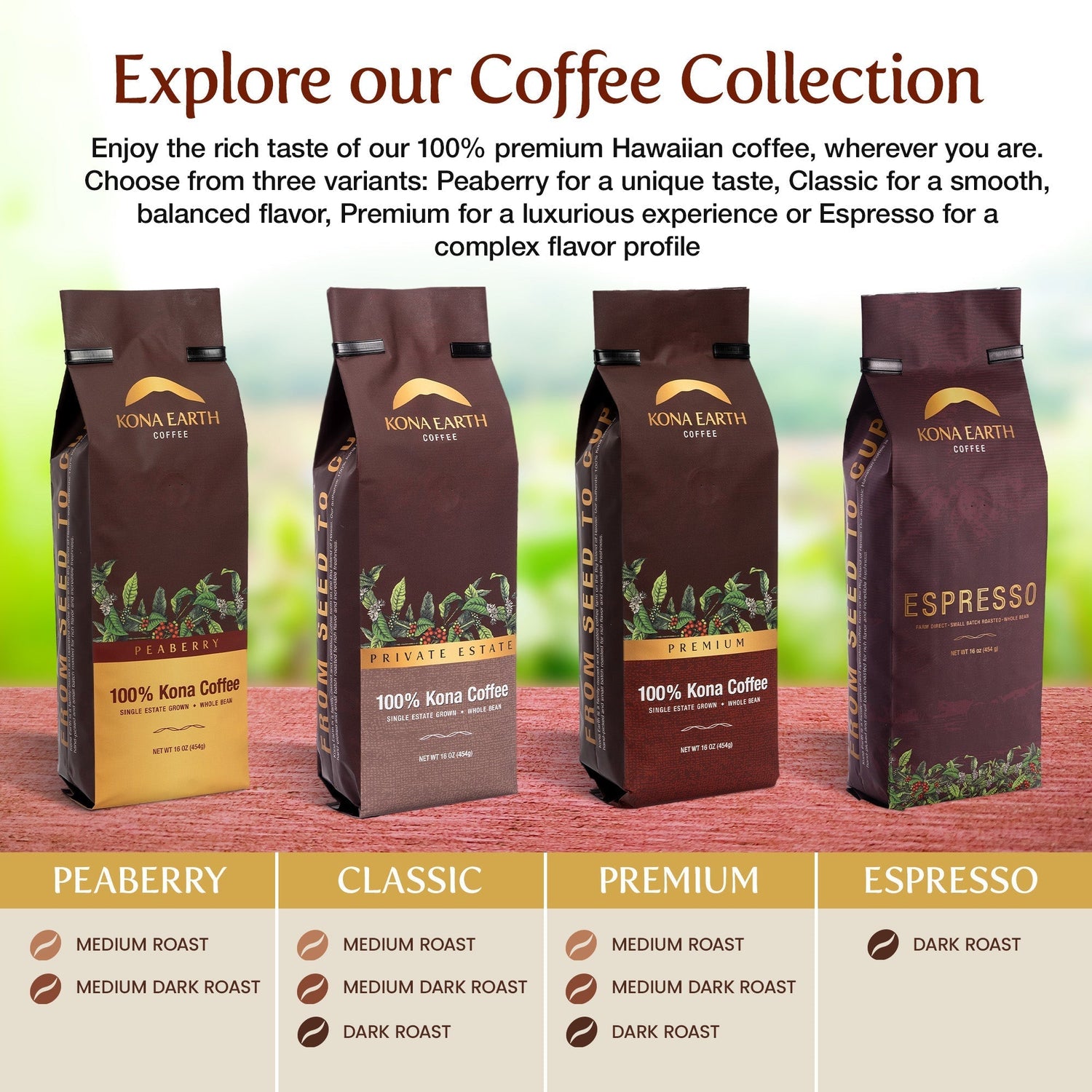
The label is your first test, and it should do more than whisper Kona. It should say 100% Kona Coffee plainly and confidently. If the package says Kona Blend, Hawaiian Blend, or uses Kona in large type while qualifying the coffee in much smaller print, that is not the same thing as pure origin Kona coffee.
This is where many buyers get misled. A blend can contain only a small amount of Kona and still feature the name prominently. That does not automatically make it low quality, but it does mean you are not buying the distinct origin experience most people expect. If your goal is authenticity, the wording has to be exact.
Real Kona coffee labeling should also feel specific rather than evasive. Look for details such as the coffee origin, whether it is whole bean or ground, roast style, and who roasted or fulfilled it. Premium coffee brands that are proud of origin purity usually do not bury those facts.
Watch for language that sounds authentic but proves little
A polished package can still be vague. Phrases like made with Kona, roasted in Hawaii, Hawaiian style, or island coffee create an impression without confirming true origin. Roasting location is not the same as growing origin, and tropical imagery is not traceability.
If a brand leads with paradise-inspired visuals but avoids saying 100% Kona Coffee, that is a signal to slow down. In a category this premium, clarity matters more than atmosphere.
Origin matters more than branding
If you want to know how to identify real Kona coffee, always come back to place. Kona is not a flavor profile you can recreate somewhere else. It is a geographic origin with a distinct climate, elevation pattern, and agricultural identity. Authenticity depends on that origin being real, not implied.
That is why source transparency matters so much. A trustworthy seller should make it easy to understand where the coffee comes from and how it reaches you. Farm-direct fulfillment, small-batch roasting, and crop-to-cup language can be meaningful if they are backed by specific origin claims. If a brand is serious about purity, you should not have to guess what is in the bag.
There is also a practical side to this. Premium origin coffee is produced in limited quantities, so real Kona coffee will not usually be positioned like a mass-market bargain. Price alone does not prove authenticity, but unusually cheap so-called Kona should raise questions. Scarcity and quality come with a premium.
Read past the front of the bag
The front panel is where brands sell the dream. The side or back panel is where you often find the truth. Real Kona coffee sellers tend to provide clear information about content, roast date or production timing, and sourcing standards. The finer details tell you whether the product was built around origin or around marketing.
Look for a roast date or at least signs of fresh, small-batch handling. Freshness does not determine whether coffee is genuinely Kona, but premium origin coffee deserves premium handling. A bag that emphasizes authenticity while giving no information on roasting or fulfillment may not be giving the customer the full picture.
Packaging should also feel deliberate. That does not mean flashy. It means the information supports the premium claim. If the label is crowded with promotional language and light on actual sourcing details, the product may be leaning harder on the romance of Kona than on the coffee itself.
Taste can confirm quality, but it should not be your only test
Real Kona coffee is often recognized by its cup character, but tasting alone is not the safest way to verify authenticity. Roast level, brewing method, and personal preference all shape what you taste. Still, there are sensory cues that can support what the label tells you.
Authentic 100% Kona Coffee is often smooth, refined, and balanced. You may notice bright but controlled acidity, a naturally sweet aroma, and a clean finish without the bitterness many buyers associate with lower-grade commodity coffee. Depending on the roast and lot, the cup can show notes like honey, nuts, brown sugar, citrus, or soft fruit.
What you are less likely to find is a cup that feels muddy, sharply burnt, or one-dimensional. That said, a darker roast can mute some of Kona's nuance, so taste has to be judged in context. A premium roast can still be rich and full while preserving the elegance that makes Kona distinctive.
Why taste alone can be misleading
A good blend can taste pleasant. A poor roast of authentic coffee can taste flat. That is why flavor should confirm sourcing, not replace it. The best buying decision comes from both: clear origin on the bag and a cup that delivers the polished profile Kona is known for.
Buy from sellers who act like origin matters
One of the strongest clues in how to identify real Kona coffee is the behavior of the seller. Brands rooted in authenticity tend to speak clearly about their coffee because origin is the product, not just the theme. They highlight 100% Kona Coffee, direct sourcing, and small-batch handling because those are the reasons customers are buying.
You should be able to understand what you are getting without decoding the fine print. Is the brand specific about purity? Do they present the coffee as premium and limited rather than generic and interchangeable? Do they communicate like experts in origin coffee, or like marketers using Kona as a shortcut to sound upscale?
This is especially relevant when buying online. Product pages and packaging should leave no confusion about whether the coffee is 100% Kona or a blend. Confidence and clarity often go together. If a seller is proud of authentic origin, they usually say so directly.
For buyers who want assurance built into the experience, a farm-direct model offers a meaningful advantage. It shortens the story between harvest and cup and reduces the distance between the source and the customer. That kind of transparency supports trust in a market where labels are not always as straightforward as they should be.
A quick standard for confident buying
If you want a practical filter, use this one: real Kona coffee should state 100% Kona Coffee, present clear origin information, match its premium price point with premium sourcing, and come from a seller that treats traceability as essential rather than optional. If any of those pieces are missing, pause before you buy.
There is room for preference in roast style, tasting notes, and brewing ritual. There is less room for compromise on origin. When the name Kona appears on the bag, it should mean something exact.
For customers who care about authenticity, the best coffee purchase is not just delicious. It is verified, transparent, and worthy of the name on the label. Brands built around that promise, including Konaearth.com, make it easier to buy with confidence and enjoy the cup for what it truly is.
The finest Kona coffee does not need a hard sell. It only needs a truthful label, careful sourcing, and a customer who knows what to look for.
Comments (0)
Leave a Comment