
If you have ever stood in front of a bag labeled Kona and wondered whether it is the real thing, you are asking the right question. Is Kona coffee pure? Sometimes yes. Often, not in the way buyers assume. In a category where a famous origin name carries serious value, purity is not a detail. It is the difference between an authentic Hawaiian cup and a blend that borrows the name without delivering the full experience.
What “pure” means in Kona coffee
When people ask whether Kona coffee is pure, they usually mean one of two things. First, is the coffee actually grown in the Kona District of Hawaii. Second, is the bag made of 100% Kona Coffee rather than a Kona blend.
That distinction matters more than most packaging suggests. True 100% Kona Coffee comes entirely from Kona-grown beans. A blend, by contrast, may contain only a small percentage of Kona coffee mixed with lower-cost beans from elsewhere. The label may still feature the word Kona prominently, which can create the impression of origin purity even when the coffee itself is mostly something else.
For buyers who care about flavor, rarity, and provenance, “pure” should mean exactly that: coffee sourced from the Kona region, with no filler, no ambiguity, and no reliance on the name alone.
Is Kona coffee pure if the label says “blend”?
Usually, no. If a package says Kona blend, it is not pure Kona coffee. It contains some Kona coffee, but not exclusively Kona coffee. That does not automatically make it a bad product, but it does make it a different product from 100% Kona Coffee.
This is where expectations often break down. A shopper sees Kona on the front of the bag and expects the distinctive smoothness, bright acidity, and layered sweetness that made the region famous. But if the coffee is mostly non-Kona beans, the cup profile shifts. You are no longer tasting a singular Hawaiian origin. You are tasting a blend with a Kona component.
For a premium buyer, that difference is not minor. It affects flavor, value, and trust.
Why Kona purity changes the cup
Kona coffee has a reputation for elegance rather than brute force. The best lots are known for balance, a silky body, gentle fruit, subtle sweetness, and a clean finish. That profile comes from place - elevation, mineral-rich volcanic soil, cloud cover, and a growing environment that is unlike any mass-market coffee source.
When the coffee is 100% Kona, those characteristics have room to speak clearly. When it is blended, they are often muted or flattened by beans chosen for cost efficiency rather than origin character. You may still get a pleasant cup, but the precision and charm that define Kona can be lost.
That is why origin purity matters beyond marketing language. Pure Kona is not just a label claim. It is what preserves the region’s sensory identity in the cup.
How to tell if Kona coffee is pure
The easiest place to start is the wording on the bag. If you want pure Kona coffee, look specifically for “100% Kona Coffee.” Those words matter. If the package says “Kona blend,” “Kona roast,” or uses Kona as a style cue without clearly stating 100%, that is your signal to read more carefully.
The next clue is the source. Premium coffee buyers should expect transparency about where the coffee was grown and how it reached the roaster. Farm-direct and crop-to-cup sourcing create a clearer chain of custody and a stronger assurance that the product in the bag matches the origin on the label.
Price can also be a clue, though not a perfect one. Authentic 100% Kona Coffee is limited, labor-intensive, and premium by nature. If the price seems unusually low for a product marketed as Kona, that should prompt a closer look. Pure origin coffee from a renowned region rarely sells at commodity pricing.
Finally, consider how specific the brand is willing to be. Vague language often hides compromise. Precise language usually signals confidence.
Why the market creates confusion
Kona is one of the most recognized coffee origins in the United States, and that prestige has consequences. The name carries enough appeal that many products lean heavily on it, even when purity is not the core offer.
That creates a market where shoppers can feel they are buying a luxury origin while actually getting a partial-origin blend. For new buyers, the packaging can look premium enough to reassure. For experienced coffee drinkers, the cup often tells a different story.
The challenge is not that blends exist. Blends have their place. The challenge is that not every shopper wants a blend, and not every label makes the difference obvious at a glance.
Is pure Kona coffee always better?
If your priority is authentic regional character, then yes, 100% Kona Coffee is the better choice. It is the most direct expression of the origin. It gives you the clearest taste of what makes Kona special.
That said, “better” still depends on what you value. Some buyers want the real thing for gifting, collecting notable origins, or elevating a daily ritual. Others may simply want a lower price point with a Kona connection. There is nothing wrong with that, as long as the product is represented honestly.
For shoppers seeking premium quality, authenticity, and a cup worthy of the Kona name, purity is usually the standard that matters most.
What 100% Kona Coffee should feel like to buy
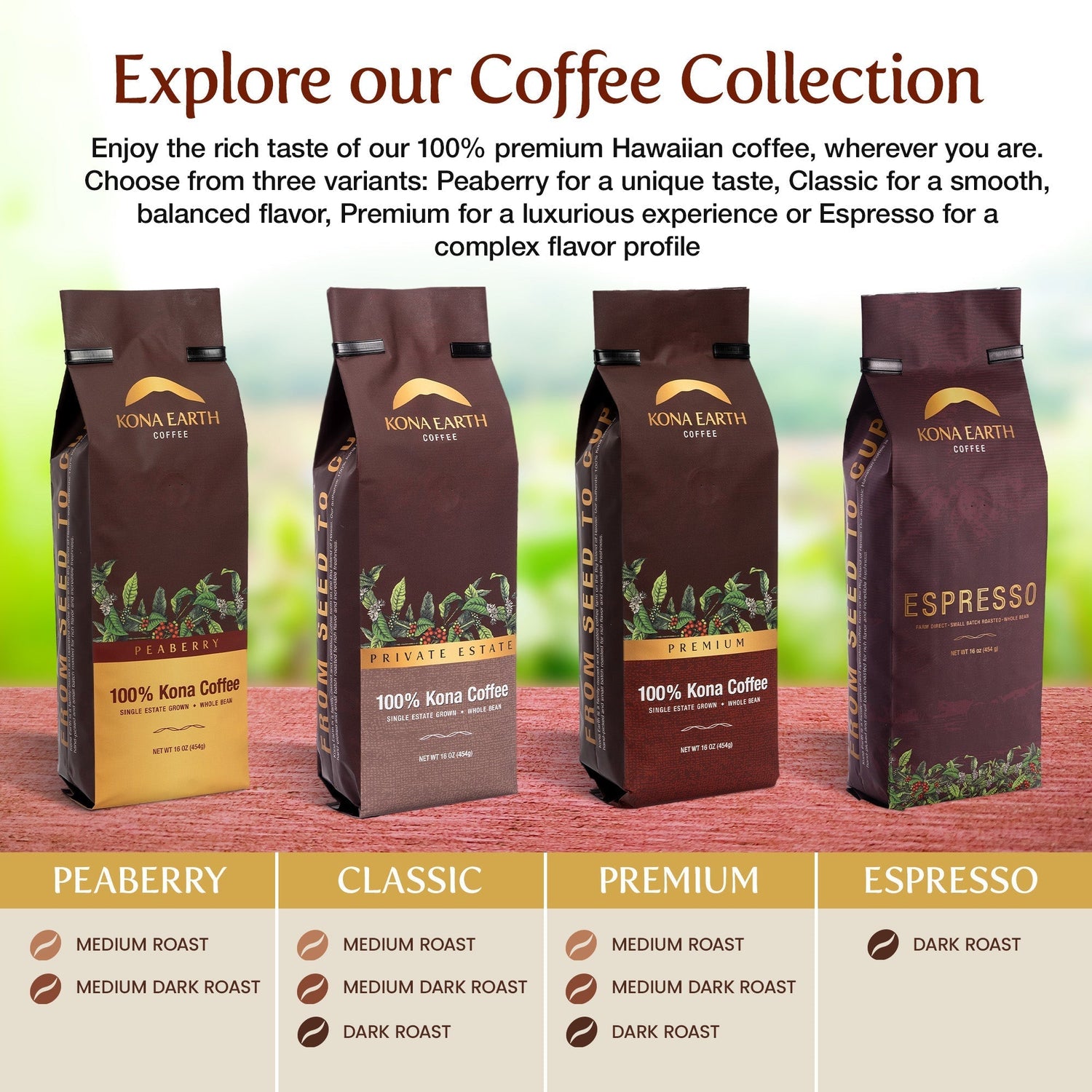
A premium purchase should not feel like detective work. When a coffee is truly pure, the brand should make that easy to understand. You should see a direct claim of 100% Kona Coffee, clear sourcing language, and a presentation that respects the rarity of the product rather than hiding behind broad lifestyle imagery.
That confidence is part of the experience. Buyers investing in a celebrated Hawaiian origin want assurance before the first brew. They want to know the coffee was grown where it says it was grown, handled with care, and roasted to highlight the cup rather than cover it up.
In that sense, purity is both an agricultural fact and a trust signal.
Is Kona coffee pure enough for gifting?
For gifts, purity matters even more. A Kona coffee gift carries meaning because the origin is special, recognizable, and indulgent. If the coffee is not 100% Kona, the gift can still be enjoyable, but it no longer offers the same level of exclusivity or authenticity.
That is especially relevant for holiday orders, corporate gifts, and milestone occasions where buyers want the product to feel elevated. A verified 100% Kona Coffee selection communicates discernment. It says the gift was chosen for quality, not just packaging.
For that reason, origin purity is not only about taste. It is part of the luxury message the recipient receives.
The difference between name recognition and real origin
Many food categories use place names loosely. Kona should not be treated that way by buyers who care about quality. It is a real place with a real growing region and a coffee profile shaped by that landscape.
When you buy pure Kona coffee, you are paying for that origin integrity. You are choosing a coffee with genuine scarcity, a direct connection to Hawaii, and a flavor profile that cannot be replicated by simply blending in a small percentage of Kona beans.
That is why the question “is Kona coffee pure” deserves a careful answer. Sometimes the answer is yes, and those coffees are worth seeking out. Sometimes the answer is only partially, and the label deserves a second look.
For shoppers who want the best version of Kona in the cup, the clearest standard is simple: choose coffee labeled 100% Kona Coffee from a source that treats authenticity as the product, not just the pitch. Konaearth.com is built around exactly that promise - award-winning, farm-direct, 100% Kona Coffee from crop to cup.
The next time a bag catches your eye, do not just look for the word Kona. Look for the proof behind it, because the most memorable cups start with coffee that is as pure as its origin claims.
Comments (0)
Leave a Comment