
A bag can say Kona in large type, show a lush Hawaiian scene, and still tell a very different story once you read the fine print. That is why Kona blend labeling examples matter. For buyers who want real origin, premium flavor, and confidence in what they are bringing home, the label is not a detail - it is the product story.
For specialty coffee drinkers, gift buyers, and anyone paying a premium for Hawaiian coffee, the difference between a blend and 100% Kona Coffee is not subtle. It shapes taste, value, and authenticity. A true origin purchase should feel clear from the first glance, not buried in tiny text on the back panel.
Why Kona blend labeling examples deserve a closer look
Kona is one of the most recognized coffee origins in the world, and that recognition has real market power. Naturally, many products want to benefit from that name. Some labels are compliant and transparent. Others lean heavily on imagery, typography, and front-of-bag wording that suggests more Kona content than the package actually contains.
That does not mean every blend is automatically deceptive. A blend can be plainly labeled and honestly sold. The issue is whether the packaging helps the customer understand what is inside or encourages assumptions that go beyond the facts.
For a premium buyer, that distinction matters. If you are seeking the distinctive cup profile associated with authentic Kona Coffee - refined aromatics, smooth body, and the polished character that comes from a prized growing region - then the percentage and source disclosure become central, not optional.
Kona blend labeling examples and what they signal
The clearest Kona blend labeling examples are usually the ones that state exactly what they are. If a package says "Kona Blend" on the front and also makes the blend status easy to find elsewhere, that is more straightforward than packaging that highlights "Kona" while minimizing the word "blend."
A simple example would be a front label that reads "Kona Blend" with a visible statement elsewhere on the package indicating the coffee is a blend rather than a pure origin product. That tells you immediately that Kona is part of the profile, but not the whole story.
A more ambiguous example is a bag that features "Kona" in oversized lettering, Hawaiian visuals, and origin-themed language, while "blend" appears in much smaller type or in a less prominent area. Legally, the wording may still be present. From a customer experience standpoint, it creates friction because the most important qualifier is visually downplayed.
Another common example is a package that uses phrases such as "Hawaiian style", "Kona region" or "Kona roast" alongside tropical branding. Those phrases can shape perception without clearly stating origin composition. When a label relies more on mood than direct disclosure, a premium buyer should slow down and inspect every panel.
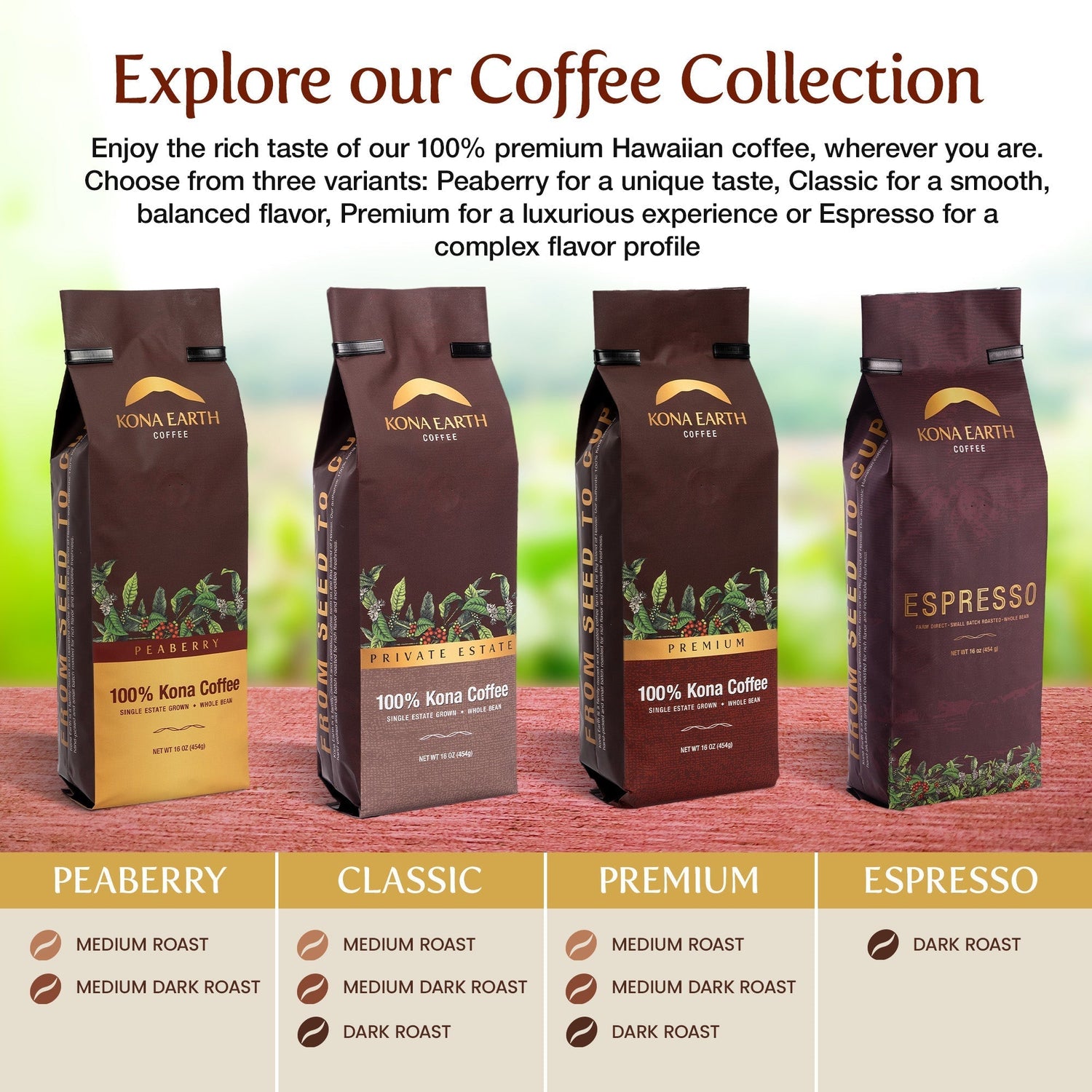
Then there is the clearest category of all: packaging marked "100% Kona Coffee." That language sets a very different expectation. It tells the buyer the product is not a blend and that the origin claim is the primary value proposition. In the luxury coffee space, that level of clarity is what serious buyers tend to seek.
The front label is only the first test
A polished front panel can say a lot, but it should never be your only source of truth. In coffee, especially with a prestigious origin, the front of the bag often sells the dream. The rest of the packaging reveals the specifics.
Look for whether the wording remains consistent from front to back. If the front strongly emphasizes Kona but the side or back introduces broader sourcing language, that is worth noting. Premium packaging should become clearer as you read, not less clear.
This is also where authenticity and positioning start to separate. A farm-direct, origin-led brand has every incentive to be precise because precision supports value. Vague labels usually do the opposite. They ask the buyer to fill in the blanks.
What to look for beyond the word blend
The word "blend" matters, but context matters just as much. A trustworthy label should help you understand what kind of product you are buying with minimal effort.
First, pay attention to how prominently the origin is stated. If "100% Kona Coffee" appears clearly and confidently, that is a direct claim. If the package uses "Kona" as the headline but leaves the actual product identity to fine print, that is a different experience.
Second, consider the overall hierarchy of the design. Premium coffee buyers should not need to hunt for basic facts. If the biggest message on the package implies one thing while the smallest text qualifies it, the label is doing more selling than informing.
Third, watch for language that sounds specific but is actually broad. Terms tied to Hawaii, island imagery, or roasting style can create an emotional impression of origin without confirming that the coffee itself is fully sourced from Kona. That does not automatically make the product wrong for every customer, but it does make it different from an origin-pure purchase.
Why this matters for taste and value
Coffee labeling is not just a legal or cosmetic issue. It directly affects the cup. Buyers who choose Kona are often paying for a recognizable sensory experience: elegant aroma, a smooth and balanced profile, and the rarity that comes with a limited and celebrated growing region.
A blend can still taste pleasant. It may even be designed for accessibility or a lower price point. But if your goal is the distinct character of authentic Kona Coffee, a blend will not deliver the same product promise as a bag labeled 100% Kona Coffee.
That is where expectations become critical. If a customer believes they are buying mostly Kona and receives a cup shaped largely by other beans, disappointment follows. In premium coffee, disappointment is expensive. The strongest brands avoid that gap by stating exactly what they sell and letting authenticity carry the message.
Reading labels like a premium coffee buyer
If you want a faster way to evaluate a bag, think like a buyer of fine wine or single-origin chocolate. Origin is part of the luxury. The clearer the provenance, the stronger the trust.
Start with the product name. Is it clearly identified as a blend, or does the packaging rely on the word "Kona" without any immediate qualification? Then scan for direct origin language. A confident origin-led brand will not hide what the coffee is.
After that, assess whether the package feels transparent or performative. Transparent packaging gives you facts with little effort. Performative packaging leans on visuals, romance, and oversized origin cues while asking you to work hard for the details.
That difference may sound subtle, but it is often the dividing line between a souvenir-style purchase and a serious coffee purchase.
When a blend may still make sense
There is room in the market for blends. Not every buyer is seeking a pure-origin coffee, and not every occasion calls for the highest tier of rarity. Some shoppers simply want a taste associated with Hawaii at a different price point.
The key is honesty. A blend can be a reasonable choice when it is marketed clearly and purchased with the right expectation. Problems arise when packaging borrows Kona's prestige while making the product's identity harder to understand.
For buyers who care deeply about authenticity, gifting, or a premium daily ritual, clear origin labeling is usually worth prioritizing. If the goal is indulgence with confidence, 100% Kona Coffee offers a level of assurance that a blend cannot match.
The premium standard buyers should expect
At the high end of coffee, transparency is part of quality. It is not enough for a package to sound luxurious. It should tell the truth quickly, confidently, and without visual games.
That is especially true for a celebrated origin like Kona. The more recognized the name, the more discipline the label should show. Premium customers are not just buying beans. They are buying provenance, trust, and a direct connection to one of the world’s most admired coffee regions.
Brands built around authentic sourcing understand that clarity is not a burden. It is the advantage. A clearly labeled bag of 100% Kona Coffee speaks to quality before the first brew and reinforces it in every cup. That is the standard worth looking for.
When you are deciding between a coffee that hints at Kona and one that plainly stands behind it, choose the label that makes fewer promises in pictures and more promises in facts.
1 comment
HERE HERE JOANIE AND STEVE! THANK YOU FOR THIS MOST EYE-OPENING, INFORMATIVE, EXTREMELY IMPORTANT AND EXCELLENT WELL VERSED IN-DEPTH ARTICLE! YOU REALLY SAID A MOUTHFUL IN A THOROUGHLY ENGAGING WAY!! AS HAS BEEN STATED MANY TIMES BEFORE, “THE TRUTH WILL SET US FREE”! THERE IS NOTHING ON EARTH MORE IMPORTANT THAN SPEAKING THE WHOLE TRUTH AND NOTHING BUT THE TRUTH PERIOD!!! WE ALL KNOW IT, BUT I FOR ONE CELEBRATE YOUR OPINION AND FACTUAL EXCELLENT ARTICLE. IT FURTHER CEMENTS THE COMPLETE TRUST I HAVE IN YOUR COMPANY’S TRUE EXCELLENCE AND STANDARDS! BRAVO!
LIBBY M.