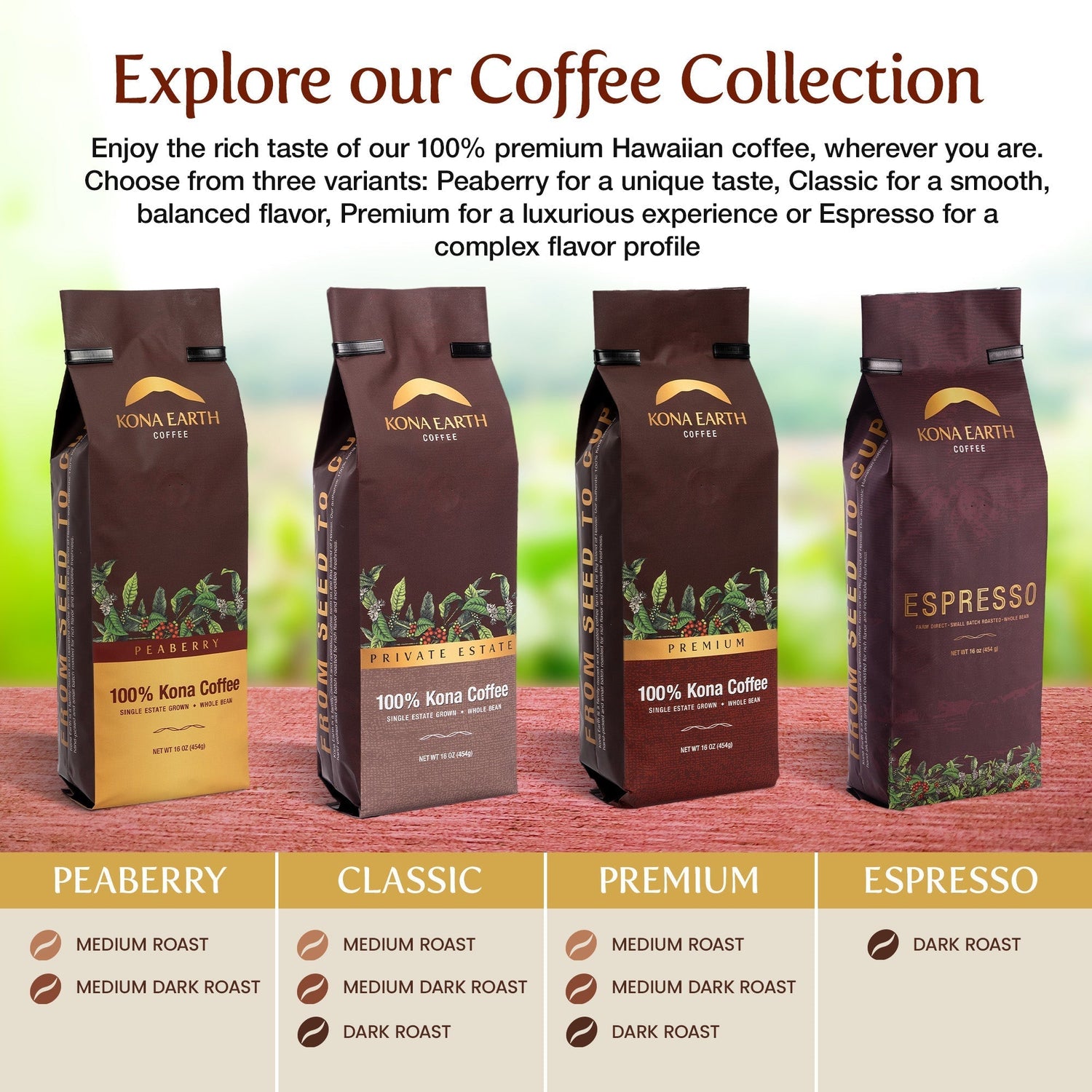


A cup labeled Kona should never feel ordinary. When people ask what makes Kona coffee special, they are usually tasting for the first time what origin purity, careful cultivation, and small-batch attention can do in the cup.
Kona coffee has a reputation that goes far beyond name recognition. It comes from a specific region on the slopes of Hualalai and Mauna Loa on Hawaii Island, where elevation, cloud cover, mineral-rich volcanic soil, and a mild climate create unusually favorable growing conditions. That combination shapes the bean before roasting ever begins, giving authentic 100% Kona Coffee its signature balance - smooth, aromatic, and layered rather than harsh or flat.
What makes Kona coffee special in the first place?
The short answer is place. Kona is not a style of roasting or a generic flavor profile. It is a tightly defined growing region with conditions that are difficult to replicate anywhere else. The landscape gives coffee trees bright mornings, afternoon cloud cover, and natural drainage from porous volcanic soil. Those details matter because coffee quality is highly sensitive to environment.
That is why genuine Kona coffee tastes distinct. It tends to offer a refined cup with soft acidity, gentle sweetness, and a clean finish. Depending on the lot and roast, you may notice notes of brown sugar, toasted nuts, cocoa, citrus, or subtle fruit. What you typically will not find is the rough bitterness that often comes with lower-grade commodity coffee.
There is also a scarcity factor. Kona coffee is produced in limited quantities compared with mass-market coffee origins. Smaller production means more selectivity, but it also means higher demand for the real thing. For buyers who care about quality, that makes authenticity just as important as flavor.
The growing conditions behind Kona's flavor
Coffee reflects terroir just as clearly as wine does. In Kona, the terroir is unusually well suited to arabica coffee. The volcanic soil is rich and well draining, helping roots develop without becoming waterlogged. The elevation is moderate, which supports slow, even cherry development. Warm mornings encourage growth, while cooler afternoons and cloud cover protect the fruit from excessive stress.
This slower maturation helps build complexity. Sugars and acids develop in better balance, which is one reason Kona coffee is often described as smooth rather than sharp. That smoothness is not softness without character. A well-produced Kona coffee still has structure and aroma, but it arrives in a polished way.
Weather can vary from season to season, and that affects the final cup. Some harvests lean brighter and more floral, while others show deeper chocolate or nut tones. That variation is part of what makes origin coffee worth seeking out. It is agricultural, not manufactured, and the best producers respect that difference instead of trying to flatten it.
Why 100% Kona Coffee matters
One of the biggest reasons people become loyal to Kona is also one of the most misunderstood. Not every bag with the word Kona on it contains a meaningful amount of Kona coffee. In the broader market, blends can use the Kona name while including only a small percentage of actual Kona beans.
For buyers investing in premium coffee, that distinction matters. If you want the true character of the region, 100% Kona Coffee is the benchmark. It gives you the flavor integrity, traceability, and confidence that come with pure origin rather than a marketing shortcut.
This is where the trade-off becomes clear. Blends may cost less, but they rarely deliver the same sensory experience. If your goal is simply a daily caffeine routine, a blend may seem good enough. If your goal is an exceptional cup with verified provenance, 100% Kona Coffee is the better choice.
Authenticity also matters for gifting. A premium coffee gift should feel intentional, not approximate. When someone receives genuine 100% Kona Coffee, the value is immediately clearer because the product carries a specific place, a known standard, and a more distinctive cup profile.
Careful harvesting and processing raise the standard
Kona coffee's appeal is not only about where it is grown. It is also about how it is handled after the cherries ripen. High-quality Kona coffee benefits from selective harvesting, where ripe cherries are picked at the right stage rather than stripped all at once. That level of care improves consistency and helps preserve sweetness and clarity.
Processing choices then shape what remains in the bean. Clean milling, proper drying, and careful sorting all protect quality. Defects, uneven drying, or rushed handling can diminish even excellent raw coffee. With premium Kona, those details are not side notes. They are part of what separates an award-worthy coffee from an average one.
Roasting matters just as much. A strong origin deserves roasting that highlights its natural strengths rather than masking them. Small-batch roasting is especially well suited to Kona because it allows more control and better responsiveness to the character of each lot. The goal is not to overpower the bean with roast flavor. It is to let Kona's sweetness, aroma, and balance come forward.
What Kona coffee tastes like
Flavor descriptions can be overdone, but Kona coffee really does stand apart when it is sourced and roasted well. The cup is often known for its smooth body, low bitterness, gentle brightness, and lingering finish. Many drinkers notice nutty, caramel, cocoa, or honeyed notes first, followed by a subtle fruit lift.
That profile is one reason Kona appeals to both seasoned coffee buyers and people trading up from ordinary supermarket coffee. It has enough nuance to satisfy an enthusiast, but it is approachable enough for someone who simply wants a richer, more elegant daily ritual.
It also performs well across brewing methods, though the experience can shift. Drip brewing often emphasizes balance and sweetness. Pour-over can reveal more delicate aromatics and brightness. French press may bring out body and chocolate notes. There is no single correct preparation, but cleaner brewing methods tend to show the origin more clearly.
The premium behind the price
People often ask whether Kona coffee is worth the higher price. That depends on what you value. If coffee is purely utilitarian, Kona may feel indulgent. If coffee is part of your everyday standard for quality, then the premium usually makes sense.
You are paying for a limited origin, favorable but finite growing land, labor-intensive harvesting, strict quality expectations, and the difference that comes with genuine 100% Kona Coffee. Price alone does not guarantee excellence, of course. The key is buying from a source that emphasizes origin purity and direct fulfillment rather than broad claims.
That direct connection matters because premium coffee buyers want confidence as much as flavor. Farm-direct sourcing reduces the distance between the customer and the cup. It also reinforces freshness and authenticity, which are central to the experience. For a brand built around crop-to-cup integrity, that is not a slogan. It is the product standard.
What makes Kona coffee special for today's buyer
Luxury in coffee is not only about rarity. It is about trust. Buyers want to know that what they are purchasing is authentic, carefully produced, and worthy of the ritual it becomes at home. Kona coffee answers that demand especially well because its value is rooted in real geography, real scarcity, and a flavor profile that consistently feels elevated.
For some, that means keeping a bag on hand for slow weekend mornings. For others, it means choosing a subscription that keeps a premium staple in regular rotation. And for gift shoppers, it means sending something with both polish and substance.
Kona Earth speaks directly to that expectation with award-winning, small-batch roasted 100% Kona Coffee delivered from farm to cup. The appeal is simple: verified origin, exceptional flavor, and a coffee experience that feels as refined as it tastes.
The next time you wonder what makes Kona coffee special, think beyond the label. The answer is in the land, the purity, the craftsmanship, and the rare pleasure of a cup that truly tastes like where it comes from.
Comments (0)
Leave a Comment