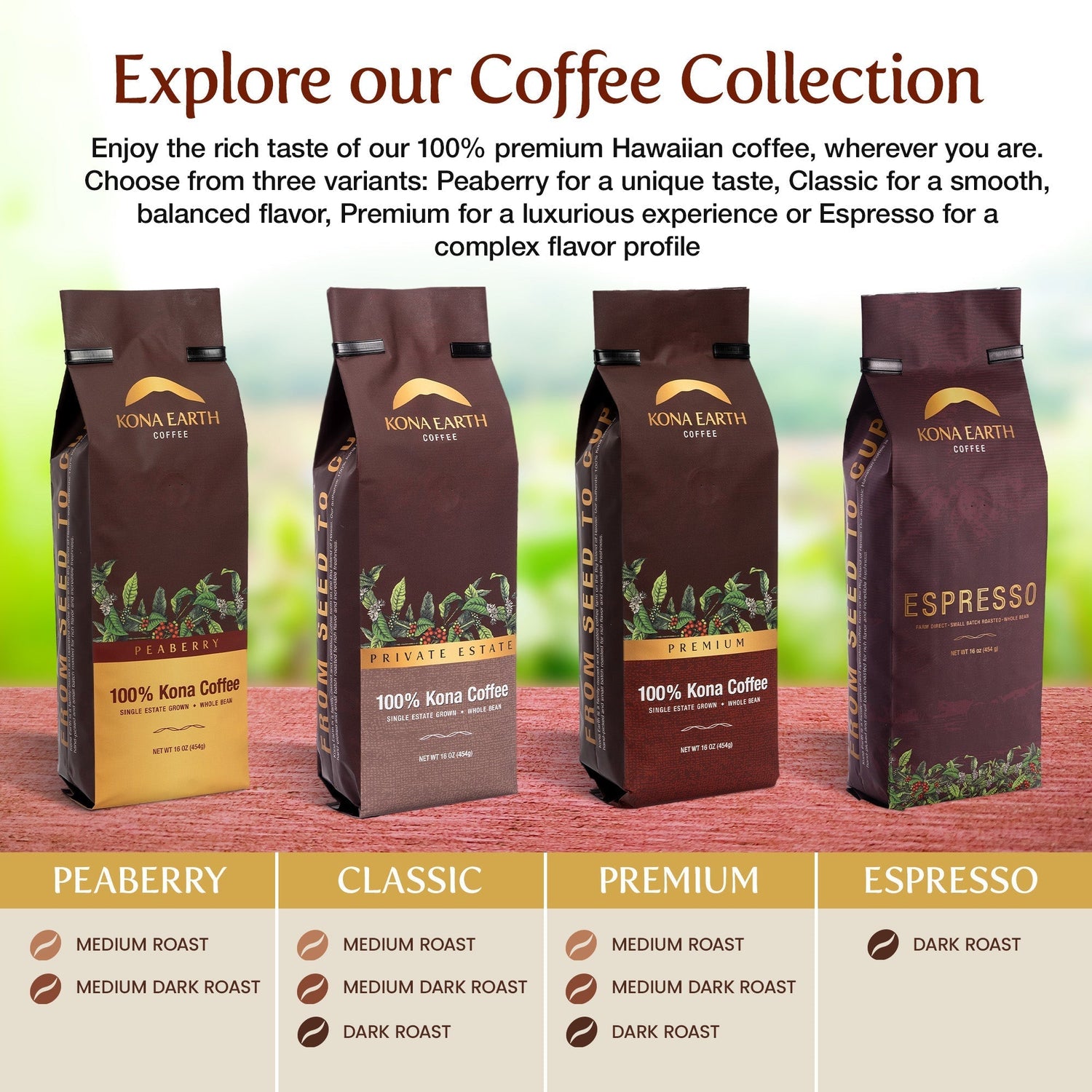


A bag of exceptional 100% Kona Coffee holds more than roasted beans. It holds the fragrance of Hawaii, the careful work of a single origin, and a flavor profile that deserves to arrive in your cup at its peak. When choosing whole bean or ground coffee, the deciding factor is usually freshness - but the best choice also depends on how you brew, how quickly you finish a bag, and how much control you want over your daily ritual.
For coffee drinkers who seek a vivid, balanced cup with the gentle sweetness and clean finish Kona is known for, whole bean coffee is often the more rewarding choice. Yet pre-ground coffee has a rightful place for households that value speed, consistency, and a simpler morning routine. The key is choosing intentionally, starting with authentic coffee that has been roasted in small batches and handled with care from farm to cup.
Whole Bean or Ground Coffee: The Freshness Difference
Coffee’s most captivating qualities are aromatic. The first scent released from freshly ground beans can be floral, nutty, bright, chocolate-toned, or softly fruity, depending on the coffee and roast. Those aromas come from delicate compounds that begin to leave the coffee as soon as it is ground.
Whole beans protect those compounds longer. Their surface area is relatively small, which slows exposure to oxygen, moisture, light, and surrounding odors. Grind the beans moments before brewing, and more of that character reaches the cup. With premium 100% Kona Coffee, that can mean a more expressive aroma, a fuller impression of sweetness, and greater clarity in every sip.
Ground coffee is more exposed by nature. Once a bean is broken into thousands of particles, it has vastly more contact with air. That does not make ground coffee poor coffee, especially when it is freshly packed and stored properly. It simply means its window of peak expression is shorter. If you open a bag and use it regularly, keeping it sealed in a cool, dry cupboard, you can still enjoy a satisfying, polished cup.
The practical question is not whether ground coffee can taste good. It can. The question is whether you want to preserve as much of a remarkable coffee’s original character as possible. If the answer is yes, whole bean is the clear advantage.
Why Grind Size Changes the Cup
Freshness gets most of the attention, but grind size is the second major reason to choose whole beans. Different brew methods need different particle sizes to extract coffee evenly. A coarse grind suits a longer immersion brew, while a medium grind is a natural fit for classic drip brewing. Fine grinds are used for concentrated, fast extractions.
When the grind is wrong, even excellent coffee can taste less balanced. Too coarse, and the water may pass through before drawing out enough flavor, leaving the cup thin or sharp. Too fine, and extraction can go too far, producing heaviness or bitterness. Grinding at home lets you adjust for your brewer, your preferred strength, and the character you enjoy most.
This flexibility is especially valuable with 100% Kona Coffee. Kona’s naturally smooth profile can be enjoyed in many ways, from a clean morning drip coffee to a rich press-style brew. A grinder gives you the freedom to let that profile shine according to your own routine rather than forcing every method through one pre-selected grind.
You do not need professional equipment to see the difference. A quality burr grinder is ideal because it produces more uniform particles than a blade grinder, helping water extract coffee more evenly. A blade grinder can still be a useful entry point, particularly when paired with a simple pulse-and-shake technique. What matters most is grinding only what you need just before brewing.
When Ground Coffee Is the Better Choice
Convenience is not a compromise in character. It is a real priority for many coffee lovers, and ground coffee can make an elevated daily ritual easier to keep. If your mornings are full, if several people share one preferred brew method, or if you are sending coffee as a thoughtful gift, pre-ground coffee removes an extra step without asking the recipient to own a grinder.
Ground coffee also provides consistency. For a household using the same automatic drip machine every day, a properly selected grind offers dependable results with straightforward measuring. That reliability can be valuable when the goal is a beautiful cup without additional equipment, adjustments, or cleanup.
Choose ground coffee when you will use it steadily after opening. Buy an amount that fits your real routine rather than storing a large supply for months. Close the bag securely after each use and keep it away from heat, sunlight, and humidity. The refrigerator and freezer are generally not ideal for a frequently opened bag because temperature shifts can introduce moisture and unwanted odors.
For gifting, ground coffee can be especially welcoming. It lets someone enjoy authentic Hawaiian coffee immediately, whether they are seasoned enthusiasts or simply ready to make an ordinary morning feel more memorable.
Whole Beans Reward a Slower Ritual
Whole bean coffee suits drinkers who notice the details. The sound of beans moving through a grinder, the fragrance that fills the kitchen, and the ability to make a small adjustment for a different brewer all add dimension to the experience. It is a few extra minutes, but they are purposeful minutes.
The result is not always dramatically different in every cup. Water quality, coffee-to-water ratio, brewer cleanliness, and roast freshness all matter. Still, when those fundamentals are in place, freshly ground coffee gives a premium origin more room to speak for itself.
At Kona Earth, farm-direct control continues through every phase of coffee production, with small-batch artisanal roasting designed to bring freshly roasted whole bean Kona Coffee directly from the farm to your door. That connection matters because origin purity and careful handling are not abstract claims. They influence what happens when hot water meets the grounds: a fragrant, smooth cup with the distinct character expected from authentic 100% Kona Coffee.
Whole beans also give you more control over how much coffee to grind. Rather than opening and exposing an entire supply at once, you can portion beans for one morning, one weekend breakfast, or a shared pot after dinner. The remainder stays protected in the bag, ready for the next brew.
Choose Based on Your Brewing Method
Your equipment can make the choice easy. If you use more than one brewer, whole bean coffee is usually the smarter fit because each method benefits from its own grind. It also makes sense if you enjoy experimenting with strength, brew time, and body.
If you rely on one drip brewer and want an uncomplicated routine, ground coffee offers practical value. Use a measured amount, follow the brewer’s water guidance, and replace the coffee promptly enough that the bag is enjoyed while its aroma remains lively.
For either format, use clean, filtered water when possible. Coffee is mostly water, so mineral-heavy or heavily treated water can obscure the elegant sweetness and delicate brightness that make Kona distinctive. Keep your brewer clean as well. Old coffee oils can mute even the finest freshly roasted beans.
A useful starting point is about two tablespoons of ground coffee for every six ounces of water, then adjust to taste. Prefer more depth? Add a little more coffee before changing the grind. Want a lighter, softer cup? Use slightly less. Small changes reveal a surprising amount about the coffee in your bag.
The Best Answer Depends on How You Drink Coffee
Choose whole bean if freshness, aroma, and brew-by-brew control are central to your coffee ritual. It is the best format for savoring a premium single-origin coffee at its most expressive, especially when you have a grinder and enjoy tailoring the cup to your method.
Choose ground coffee if ease and dependable preparation matter more than customization. It is an excellent choice for busy mornings, familiar brewers, and gifts meant to be enjoyed without delay. The quality of the coffee, the care behind its sourcing, and the freshness of its roast still matter enormously.
Whichever you choose, treat the coffee with the same consideration that went into growing and roasting it. Store it well, brew it with fresh water, and give yourself a moment to notice the aroma before the first sip. That small pause is where a daily cup becomes a taste of paradise.
Comments (0)
Leave a Comment