

A bag labeled Arabica can come from nearly anywhere in the coffee-growing world. A bag of 100% Kona coffee comes from one remarkably specific place: the fertile slopes of Hawaii’s Kona District. That is the distinction between Arabica vs Kona coffee. One is a broad coffee species; the other is a celebrated, tightly defined origin within that species.
For coffee drinkers who want more than a generic claim of quality, the difference matters. Arabica tells you something about the botanical family of the bean. Authentic 100% Kona Coffee tells you where it was grown, the conditions that shaped it, and why its cup is known for extraordinary balance.
Kona Coffee vs Arabica: Origin vs Species
Arabica, formally known as Coffea arabica, is the species behind much of the world’s premium coffee. It is prized for its aromatic complexity, nuanced acidity, and broad range of flavors. Depending on where it is grown and how it is processed, Arabica can taste floral, berry-like, chocolatey, citrusy, nutty, or wine-like.
Kona coffee may be Arabica coffee (Kona Typica to be exact), but not all Arabica coffee is Kona. (Note: 100% Kona Coffee connotes the origin not the coffee varietal. In addition to Kona Typica, other varietals may include Gesha, Red Bourbon, Yellow Catura, etc.)
True Kona coffee is grown in the Kona coffee belt on the western side of Hawaii’s Big Island. This narrow growing region (only about 30 miles long and 3 miles wide) benefits from volcanic soil, gentle morning sun, afternoon cloud cover, and a climate that supports slow, even cherry development. Those conditions give Kona its recognizable character: smooth, fragrant, clean, and naturally refined.
Think of Arabica as the category and Kona as one of its most distinctive place-driven expressions. Saying a coffee is Arabica is like saying a wine is made from a particular grape family. Saying it is 100% Kona Coffee tells a more complete story about where that coffee earned its flavor.
Why Kona Tastes Different
The most memorable Kona coffees are not defined by one loud flavor note. Their appeal is balance. A well-grown, carefully roasted Kona coffee often opens with a warm, inviting aroma, carries a silky body, and finishes cleanly without harsh bitterness.
Many coffee lovers notice gentle sweetness first, followed by notes that may suggest toasted nuts, cocoa, caramel, brown sugar, or bright fruit. The exact profile changes with the lot, harvest, roast, and brewing method, but the overall experience tends to remain elegant rather than aggressive.
Arabica from other origins can be exceptional too, of course. Some may offer sparkling citrus, intense berry notes, deep chocolate richness, or a heavier body. The trade-off is that the word Arabica alone does not predict the cup. It covers a vast world of elevations, soils, climates, cultivars, processing choices, and roast styles.
Kona offers a more specific expectation. When the coffee is genuinely 100% Kona and roasted with care, drinkers can look forward to a polished, low-bitterness cup with enough character to feel special and enough balance to enjoy every day.
The Kona growing environment
Coffee is an agricultural product, and the place or terroir leaves a signature. Kona’s volcanic earth provides mineral-rich ground for the trees. The region’s elevation and temperate island weather help coffee cherries mature at a measured pace, allowing sugars and flavor compounds to develop gradually.
Afternoon clouds are part of the advantage. They shield the coffee trees from the most intense sun, while regular rainfall supports healthy growth. The result is a natural setting synonymous with rare Hawaiian coffee and a cup profile that feels naturally smooth.
This does not mean every coffee grown in Kona tastes identical. Skilled cultivation, selective harvesting, processing, storage, and small-batch roasting still shape the final cup. Origin establishes the potential. Craft brings it forward.
Is Kona Coffee Better Than Arabica?
The question is slightly misleading because Kona coffee is Arabica. A better comparison is 100% Kona Coffee versus a typical bag labeled only Arabica.
If you want a coffee with a clear sense of place, exceptional smoothness, and a luxurious everyday profile, Kona is an outstanding choice. Its rarity and defined origin make it especially appealing to drinkers who value provenance as much as taste. It is also a thoughtful gift because the name carries a real connection to Hawaii rather than a vague promise of premium quality.
If you enjoy chasing radically different flavor profiles from around the world, broad Arabica offerings provide more variety. One bag might be bright and floral; another could be dark and syrupy. That exploration can be rewarding, but it requires more attention to origin details than a simple Arabica label provides.
For many households, Kona becomes the coffee they reach for when they want a consistently elevated ritual. It is approachable enough for a quiet morning cup, yet distinctive enough to serve when guests are over. Its value is not that it replaces every other Arabica experience. Its value is that it delivers a rare, unmistakably refined one.
What “100% Kona Coffee” Actually Means
This is where shopping carefully pays off. Kona is a protected geographic name associated with coffee grown in the Kona region. Yet coffee packaging can use Kona in ways that may not deliver the pure origin many buyers expect.
A label that says “Kona blend” may contain only a small amount of Kona coffee alongside beans from other origins. That is not necessarily a bad coffee, but it is not the same experience as a bag labeled 100% Kona Coffee. The blend may be less costly, but it will not offer the full character, traceability, or exclusivity of coffee grown entirely in Kona.
Look for clear, direct wording on the package. “100% Kona Coffee” is the standard to seek when authenticity is the priority. A seller should also be transparent about sourcing and roast freshness. Premium coffee deserves a premium level of clarity.
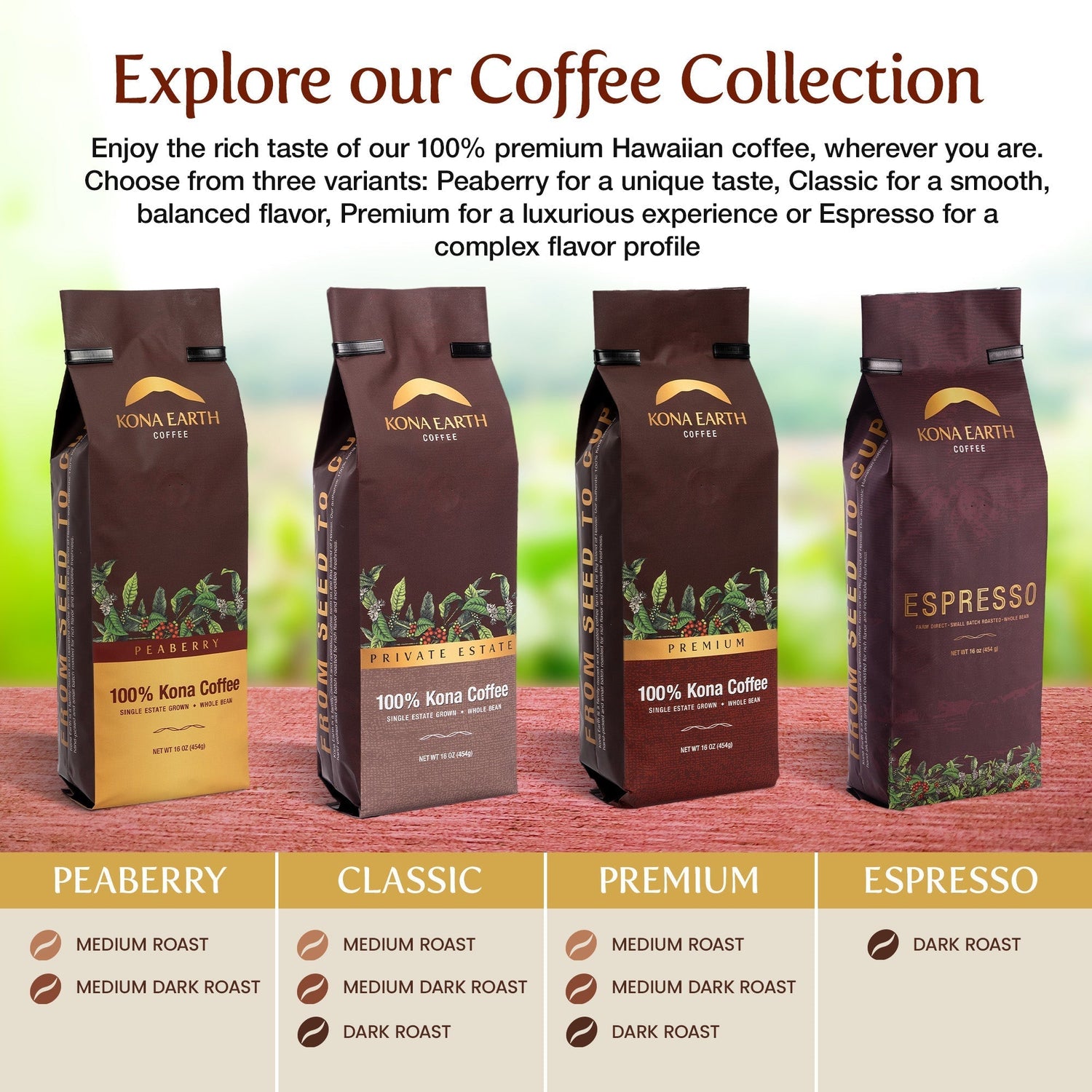
At Kona Earth, the focus is on award-winning, small-batch roasted 100% Kona Coffee delivered from farm to cup. That direct connection helps preserve what makes Kona worth choosing in the first place: origin purity, careful handling, and a coffee experience rooted in Hawaii rather than a generic blend.
How Roast Level Changes the Comparison
Origin and species are only part of the story. Roast level can either spotlight or soften a coffee’s natural character.
A medium roast generally preserves more of Kona’s delicate sweetness and aromatic brightness. It can be an excellent choice for drinkers who want to notice the coffee’s origin-specific detail. A medium dark roast often highlights the classic Kona balance, bringing together a smooth body, toasted sweetness, and clean finish.
A darker roast creates deeper caramelized notes and a fuller impression on the palate. It can be satisfying for people who prefer a bolder cup, though very dark roasting may obscure some of the subtleties that make fine Kona distinctive. There is no single correct choice. The best roast is the one that fits how you brew and what you want from your daily cup.
For a drip brewer, a medium roast can offer an especially dependable expression of Kona’s harmony. For a pour-over, a medium roast may reveal more aroma and brightness. For a rich, concentrated preparation, a medium-dark option may bring more depth while keeping the finish composed.
Choosing the Right Coffee for Your Cup
Choose a general Arabica coffee when your goal is variety, a specific flavor experiment, or a lower-cost daily option. The key is to look beyond the word Arabica and check the country, region, roast date, and sourcing details. Arabica quality ranges widely, and a clear origin is often more meaningful than the species name alone.
Choose 100% Kona Coffee when you want a rare Hawaiian origin with a smooth, balanced profile and a traceable sense of place. It is particularly suited to those mornings when coffee is more than caffeine. It is a pause, a ritual, and a small taste of paradise prepared with intention.
The next time you compare labels, remember that Arabica describes the tree, while Kona describes the remarkable ground beneath it. Choose the coffee whose story, flavor, and standards belong in your cup.
Comments (0)
Leave a Comment