

Hawaiian coffee has a way of making an ordinary morning feel more considered. Its appeal starts with the islands themselves: mineral-rich volcanic soil, warm sunshine, gentle rainfall, and elevation that encourages coffee cherries to mature at an unhurried pace. But the cup in your hands is shaped by more than a postcard-worthy setting. It comes down to origin, cultivation, processing, roasting, and how quickly the finished beans travel from the farm to your kitchen.
For coffee drinkers who want a richer daily ritual, Hawaiian-grown coffee offers a distinct sense of place. And within that category, 100% Kona Coffee remains one of the most recognizable and sought-after expressions of Hawaii's coffee heritage.
What Gives Hawaiian Coffee Its Character?
Hawaii is the only U.S. state with the tropical climate needed to grow coffee at a meaningful scale. The islands offer varied microclimates, which means coffees can differ from one growing area to the next. Sun exposure, rainfall, soil composition, and elevation all influence how a coffee cherry develops and, ultimately, how it tastes once roasted and brewed.
The result is often a cup known for balance rather than brute force. Many Hawaiian coffees are appreciated for their smooth body, gentle brightness, and inviting sweetness. Depending on the lot and roast, you may find notes that suggest caramel, toasted nuts, cocoa, honey, or soft fruit. These are not added flavors. They are the natural result of variety, growing conditions, harvest timing, and careful craft after the cherry is picked.
That balance makes Hawaiian coffee especially satisfying for people who want complexity without a harsh finish. It is elegant enough to enjoy black, yet structured enough to hold its character with milk or in a cold brew. No single description fits every coffee grown in Hawaii, though. Origin is a starting point, not a substitute for knowing exactly what is in the bag.
Hawaiian Coffee and the Meaning of 100% Kona
Kona is a specific coffee-growing region on Hawaii's Big Island, not a catchall term for any coffee with a Hawaiian connection. Its celebrated growing conditions include porous volcanic soil and a dependable pattern of sunny mornings and cloud cover or rain later in the day. This environment supports slow, even cherry development and helps create the polished, approachable profile associated with quality Kona coffee.
That reputation has also made the name valuable on a label. Shoppers should understand the difference between a product labeled 100% Kona Coffee and one that uses Kona as part of a blend name. A blend may contain only a small amount of Kona coffee alongside beans from other origins. That does not make it inherently poor coffee, but it is a different product with a different flavor, traceability, and value proposition.
When you choose 100% Kona Coffee, you are choosing coffee sourced entirely from the Kona region. For a buyer who values origin purity, that clarity matters. It offers a more direct relationship between the place named on the package and the coffee in the cup.
Why origin purity changes the experience
Coffee is agricultural. Like wine, chocolate, or olive oil, its quality and personality are connected to where it was grown and how it was handled. Blending can create consistency or lower a price point, but it can also soften the regional identity that makes a single-origin coffee compelling.
A verified 100% Kona Coffee purchase is about preserving that identity. You taste the distinctive character of one renowned origin rather than trying to locate it within a broader blend. It is a more intentional choice for your own kitchen and a more meaningful gift for someone who appreciates exceptional food and drink.
Freshness Is the Difference You Can Taste
Even beautiful coffee loses its sparkle when it sits too long after roasting. Once roasted, coffee begins releasing aromatic compounds. Over time, those vivid aromas and layered flavors fade, especially after the beans are ground. That is why whole bean coffee is the preferred format for anyone seeking the fullest expression of a premium origin.
Small-batch artisanal roasting gives the roast team greater control over development. The goal is not simply to make the beans darker or lighter. It is to bring forward sweetness, body, fragrance, and balance while respecting the inherent quality of the coffee. A roast that overwhelms the bean can hide its origin. A carefully managed roast lets the character of Kona remain present from the first aroma to the finish.
Farm-direct fulfillment adds another advantage: fewer unnecessary stops between the source and your doorstep. When control stays close to the farm through production, roasting, and shipping, there is stronger accountability at every phase. You know what you are buying, where it comes from, and why freshness is more than a marketing claim.
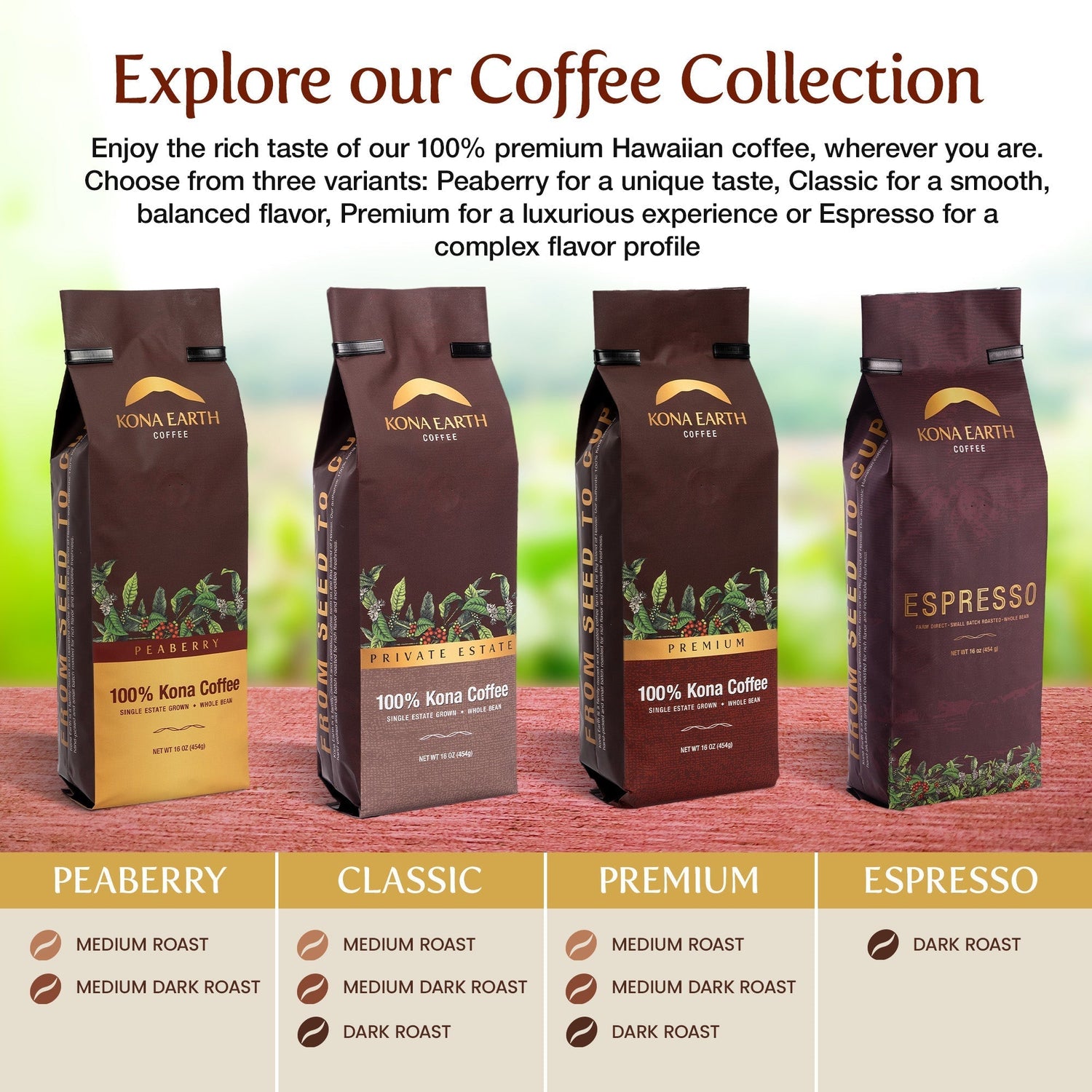
Kona Earth follows this crop-to-cup approach with small-batch roasted, whole bean 100% Kona Coffee shipped directly from the farm. It is a model designed for coffee lovers who want authenticity without guessing what is behind the label.
How to Brew Hawaiian Coffee at Home
The best brewing method depends on the flavor experience you want. A pour-over emphasizes fragrance, clarity, and nuanced sweetness. A French press creates more body and texture. A drip brewer is ideal for a dependable daily pot, while an espresso machine can bring out a concentrated, velvety side of a well-developed Kona roast.
Whatever method you choose, grind immediately before brewing when possible. Use filtered water, a clean brewer, and a consistent coffee-to-water ratio. Start around 1 gram of coffee for every 16 grams of water, then adjust to taste. If the cup tastes thin or sharp, use a slightly finer grind, more coffee, or a longer extraction. If it tastes dry, bitter, or heavy, try a coarser grind, less coffee, or a shorter extraction.
Water temperature matters, too. Water just below boiling is a reliable place to start for most brewing methods. For a brighter, more delicate roast, slightly cooler water can help preserve a softer profile. There is no need to overcomplicate the process. Fresh beans, an even grind, and a little attention to proportion will take you remarkably far.
Store the beans, not the story
Premium coffee deserves simple, practical care. Keep whole beans in an airtight container away from heat, direct sunlight, and moisture. A cabinet is usually better than a countertop near the stove. Buy an amount you will enjoy while it is fresh, rather than stockpiling more than you can reasonably brew.
For a reliable supply without the last-minute grocery run, recurring delivery can be a smart fit. A Kona Coffee Club makes it easier to keep freshly roasted coffee on hand while turning a premium cup into a consistent part of the week. It also works well for households where one exceptional coffee quickly becomes the one everyone reaches for.
Choosing Hawaiian Coffee With Confidence
Start by reading the package closely. If 100% Kona Coffee is what you want, look for that exact origin statement rather than relying on island imagery or a familiar name. Then consider roast style and brewing preference. Lighter roasts tend to spotlight aromatic detail and brightness, while medium and darker roasts often deliver more caramelized sweetness, fuller body, and a deeper finish.
Price can also tell part of the story. Coffee grown in Hawaii is produced under conditions that differ from large-scale commodity coffee, and careful picking, processing, and small-batch roasting require real labor and attention. A higher price does not guarantee excellence, but a suspiciously low price for a product presented as Kona should invite a closer look at the label.
Finally, buy from a source that is clear about what it sells. The best Hawaiian coffee experience begins with transparent origin, continues with fresh roasting, and ends with a cup that feels worthy of the place it came from. Brew it slowly on a quiet morning, serve it after a memorable meal, or send it as a gift that brings a little of Hawaii into someone else's day.
Comments (0)
Leave a Comment